
KDI 경제동향 KDI 경제동향 2009.7 2009.07.07
KDI 경제동향
KDI 경제동향 2009.7
2009.07.07
- 영문요약
-
* All growth figures are on a year-on-year basis unless otherwise noted.
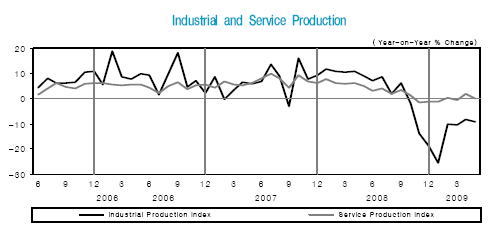
Although the employment situation remains bleak, the Korean economy appears to be moving away from the declining phase as the rapid contraction in domestic demand and exports are recovering relatively fast □ Production in mining and manufacturing in May showed gradual improvements following the previous month while the service industry performed poorly. - The growth rate of the mining and manufacturing production index recorded -9.0%, a similar level as the previous month (-8.2%). [Table 2-1]
- The seasonally adjusted month-on-month growth rate registered 1.6%, continuing at an increasing pace for five consecutive months, though lower than the previous month (2.6%).
- By sector, semiconductor and parts (7.0%), audiovisual communications (9.0%) and automobile (4.1%) registered increased growth rates from the previous month.
- Service production growth rate recorded 0.2%, a slower growth than the previous month (1.8%). [Table 2-4]
- The seasonally adjusted month-on-month growth rate recorded -1.2%, a drop from the previous month (2.8%).
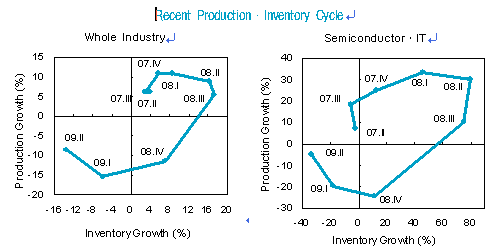
- Production-inventory cycle shows a continued inventory adjustment and a slower decline in production. [Table 2-3]
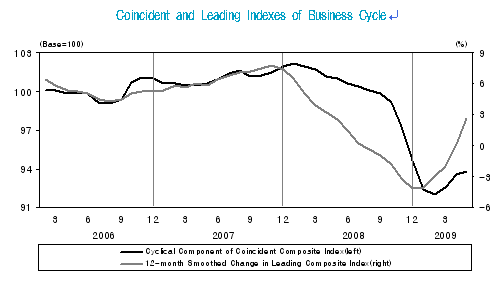
- As for the composite index for May, the coincident index continued to rise gradually from the previous month and the leading index improved markedly, following the previous month. [Table 2-1]
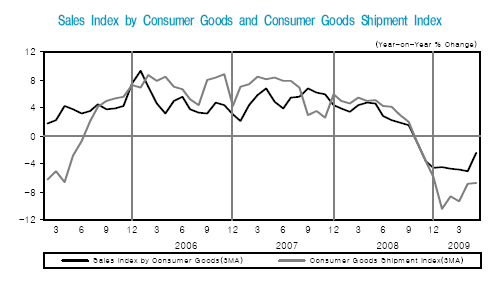
□ Most consumption-related economic indicators in May showed that the depression in consumption was mitigated relatively fast as durable goods consumption grew relatively fast. - The consumer goods sales index registered a 1.7% growth rate, the first "plus" growth since last August as the consumption of durable goods such as automobile rose sharply. [Table 3-2]
- By sector, durable goods consumption rose by 4.8% and quasi-durable and non-durable goods consumption rose 0.4% each.
- Such a rise is largely attributable to the rapid increase (20.6%) in automobile sales due to the government's temporary tax deduction on the purchase of new cars.
- Meanwhile, the seasonally adjusted month-on-month growth rate of the consumer goods sales index registered 5.1%.
- Shipment of domestic consumer goods which was in the declining phase improved, recording -3.5%, (5.6% on a month-on-month basis) up from the previous month (-7.8%), mainly led by durable goods (1.2%). [Table 3-3]
- Consumer sentiment index in June registered 106, above the benchmark level (100), as the stagnation in the real economy was lifted with the stabilization in stock prices and foreign exchange rates. [Table 3-4]
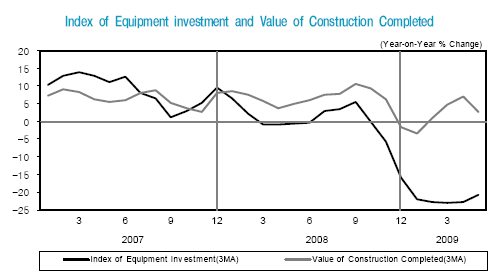
□ In May, investment related indicators showed that the severe contraction in equipment investment has alleviated. - Equipment investment index recorded -13.1%, a drastic improvement from the previous month (-25.6%) with the month-on-month growth rate recording 16.7%, the highest growth since last October. [Table 4-1]
- The import of capital goods for domestic demand and machinery registered -28.9% and -28.0%, respectively, showing slower declining paces compared to the previous month (-31.3% and -32.5%, respectively). [Table 4-2]
- Domestic machinery orders received, a leading indicator, recorded -16.1%, improving from the previous month (-25.8%). [Table 4-3]
- The value of construction completed recorded a lower growth rate of -1.1% than the previous month (6.0%), influenced by the slower growth in public and civil works and by a large fall in private and building construction. [Table 5-2]
- The construction orders received registered a growth rate of -18.5%, a larger fall from the previous month (-8.0%), attributable to the continued slump in private and building construction orders received. [Table 5-3]
□ The trade account in June registered a record high surplus of 7.44 billion dollars as the decline of exports was moderated and the falling phase of imports continued mainly led by crude oil imports. - Exports registered an improved growth rate of -11.3%, compared to the previous month (-28.5%), boosted by the rise in exports of a few main items such as shipbuilding, liquid crystal devices (LCDs) and steel. [Table 6-1]
- The exports of ships registered a significantly higher growth rate of 84.5% due to the existing steady and robust orders received, and the exports of LCDs also recorded a large growth mainly led by its exports to China.
- Imports recorded a large drop of -32.3% with a decline in imports of major energy resources and both capital and consumer goods. [Table 6-3]
Balance of Payment in May 2009- Current account recorded a smaller surplus than that of the previous month with reduced surplus in goods account and increased deficit in service account. [Table 6-6]
- Goods account registered a surplus of $5.02 billion while income account registered a surplus of $360 million due to the decreased dividend payments to foreign investors.
- Service account recorded a deficit of $1.47 billon, larger than the previous month mainly due to the larger deficit in travel account.
- Capital account recorded a rise from a net outflow of $2.16 billion in the previous month to a net inflow of $6.72 billion. [Table 6-7]
- The portfolio investment account recorded a reduced net inflow of $4.27 billion, compared to the previous month ($7.13 billion).
- Derivatives account recorded a net inflow of $1.34 billion from a net outflow of $680 million in the previous month, influenced by the fall in the KRW/USD exchange rate.
- Other investment accounts recorded a turnaround from the net outflow of $4.53 billion from the net inflow of $1.27 billion due to the increased loan to local financial institutions and the reduced deposits.
□ In May, the labor market still remained under stress as the number of employed decreased further and the unemployment rate rose. [Table 7-1] - The number of hired workers fell by 219,000, a larger fall compared to the previous month (-188,000), and the seasonally adjusted rates of unemployment recorded 3.9%, up by 0.2%p. [Table 7-1]
- The number of hired female workers dropped by 211,000, causing a further drop in the total number of employment.
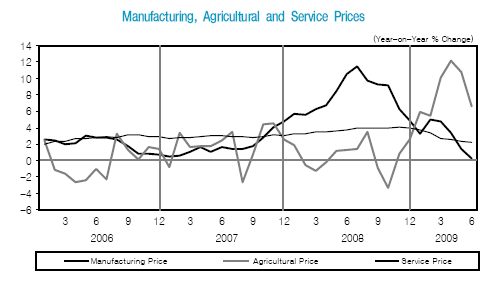
□ CPI in May recorded a 2.0% growth rate, significantly lower than the previous month (2.7%), as the upward trend of industrial and agricultural, livestock, and marine products slowed down further. - The growth rate of commodity price recorded 2.2%, a sharp drop from the previous month (3.3%), whereas the growth rate of service prices recorded 2.2%, similar to the previous month. [Table 8-1]
- Core inflation registered 3.5%, down from the previous month (3.9%).
- The purchase price of apartments and cheonsei nationwide recorded a rise of 0.2% and 0.4%, respectively, compared to the previous month, mainly driven by the upward movement in Seoul. [Table 8-3]
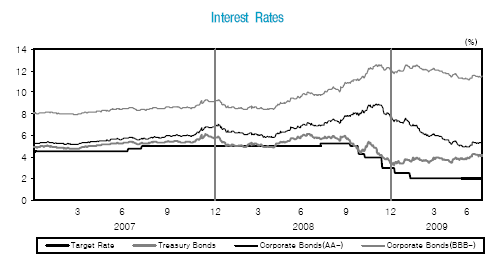
□ In June, due to the expectation of economic recovery within domestic financial markets, the market interest rate rose while stock prices and foreign exchange rates fluctuated continuousely. - The interest rate of Treasury bond rose due to the large-scale selling of treasury bond futures by foreign investors and the expectation of changes in the monetary policy stance. [Table 9-1]
- The Treasury bond yields rose by 33bp to record 4.16% as of late June, up from the previous month.
- AA- corporate bond yields recorded 5.39% (41bp up from the previous month), while BBB- corporate bond yields recorded 11.47% (22bp up from the previous month).
- Accordingly, the term spread recorded 217bp, up from the previous month (184bp), while the credit spread between AA- and BBB- corporate bonds recorded 608bp, 19bp down from the previous month.
- KRW/USD exchange rate witnessed fluctuations influenced by downside factors such as the trade account surplus and the rising foreign reserve and upside factors such as the resurfacing of geopolitical risks.
- The KOSPI index closed at 1390.07 at the end of June, 5.82p down from the end of the previous month, as it turned downward due to the net selling by foreign investors by mid-June ending the upward trend carried over from the previous month. [Table 9-2]
□ The overall global economy still appears to be contracted, despite the positive signs from some economic indicators. - Recently, leading economic indicators and sentiment indices of a few countries appear to improve and their economic growth rates are adjusted upward, though just slightly, suggesting a gradual alleviation in the rapid fall of the economies.
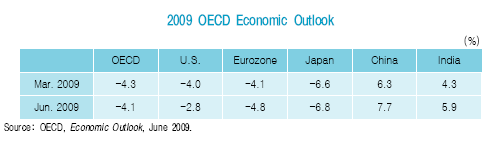
- However, with the continued declining pace of asset prices, private consumption in advanced countries remains contracted, while the employment conditions become worse as the unemployment rate steadily rises, indicating a continued economic recession.
- As for developing countries, economic stimulus plans have somewhat improved investments in the public sectors, but due to the ongoing uncertainty of the global economy, real economic indicators still remain weak overall, including exports.
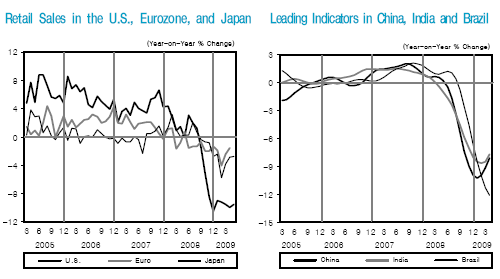
- The U.S. economy demonstrated a continued contraction in consumption with a consistent rise in household savings rate, although some of its economic leading indicators improved and the rapid fall in economic growth seems to slow down.
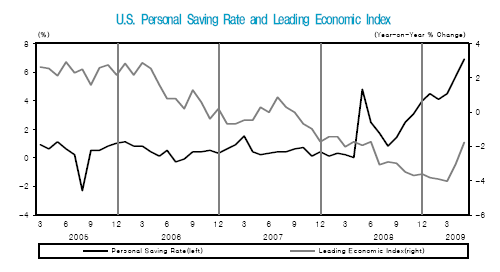
- In Eurozone, the sentiment index of major economic players have improved partially due to their aggressive economic stabilization policy, but the deepening slowdown in production and employment left overall economy still contracted.
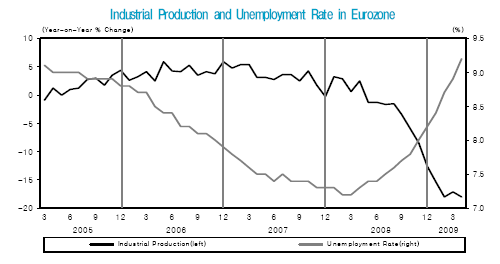
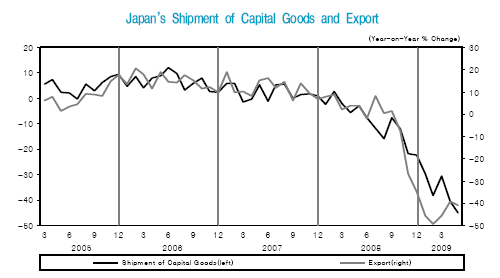
- The Japanese economy appears to continue its declining phase as its conditions in domestic demand and employment are deteriorating and the recovery of the global economy is delayed, hindering exports.
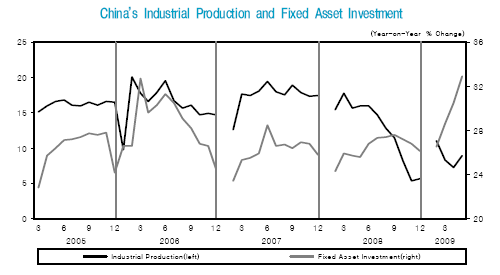
- The Chinese economy maintains a steady growth in its domestic demand boosted by the increase in production and fixed-asset investment due to the government's pro-active economic stimulus plans.
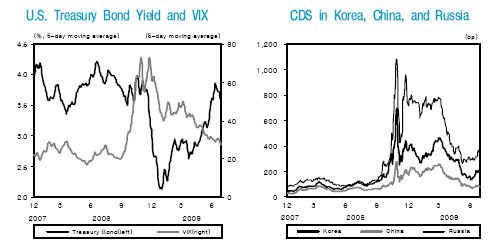
□ Meanwhile, despite the low interest rate policy of major advanced countries, the forecast for continued slowdown in real economies has increased the volatility of the global financial market in some parts. - Due to the concerns over the delay in global economic recovery, the long-term interest rates of major advanced countries turned downward from the recent fast upward trend.
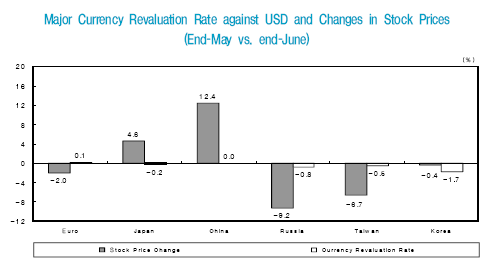
- Amidst the fall in stock prices of the U.S., Japan and some emerging economies, the US dollar turned weak against major currencies after it grew stronger until mid-June.
- The growth rate of the mining and manufacturing production index recorded -9.0%, a similar level as the previous month (-8.2%). [Table 2-1]
- 목차
-
主要 經濟指標 Major Economic Indicators
要約 및 評價 Summary and Assessment
1. 國內總生産Contents
1-1. 經濟活動別 國內總生産 (2000年 不變價格)
GDP by Economic Activity (at 2000 Constant Prices)
1-2. 國內總生産에 대한 支出 (2000年 不變價格)
Expenditure on GDP (at 2000 Constant Prices)
1-3. 國內總所得 및 國民總所得 (2000年 不變價格)
Gross Domestic Income and Gross National Income (at 2000 Constant Prices)
1-4. 經濟活動別 國內總生産 (經常價格)
GDP by Economic Activity (at Current Prices)
1-5. 國內總生産에 대한 支出 (經常價格)
Expenditure on GDP (at Current Prices)
2. 景氣
2-1. 鑛工業 ·서비스 生産 및 景氣綜合指數7
Industrial Production, Service Activity, and Composite Indices of Business Indicators
2-2. 産業別, 工業構造別 鑛工業 生産
Industrial Production by Industry and Industrial Structure
2-3. 生産者製品 出荷 및 在庫指數
Shipment and Inventory Indices
2-4. 業種別 서비스活動
Service Activity Index by Type
2-5. 企業景氣實事指數
Business Survey Index
3. 消費
3-1. 民間消費
Private Consumption
3-2. 都小賣販賣額指數와 消費財販賣額指數
Wholesale and Retail Sales Index and Sales Index by Consumer Goods
3-3. 消費財出荷 및 消費財 輸入
Consumer Goods Shipment Index and Consumer Goods Import
3-4. 消費者動向調査와 消費者展望調査
Consumer Survey Index(CSI) and Consumer Sentiment Survey(CSS)
4. 設備投資
4-1. 設備投資와 設備投資指數
Equipment Investment and Index of Equipment Investment
4-2. 內需用資本財輸入額과 機械類輸入額
Capital Good Import for Domestic Demand and Machinery Import
4-3. 國內機械受注
Machinery Orders Received
5. 建設投資
5-1. 用度別 建設投資
Construction Investment
5-2. 建設旣成額
Value of Construction Completed
5-3. 國內建設受注
Construction Orders Received
5-4. 建築許可面積 및 建築着工面積
Building Construction Permits and Building Construction Initiated
5-5. 住宅建設 및 土地去來
Housing Construction and Real Estate Transaction
6. 對外去來
6-1. 商品別 輸出
Exports by Commodity
6-2. 主要 地域別 輸出
Exports by Region
6-3. 用度別 輸入
Imports by Usage
6-4 Imports by Region
6-5. 輸出入 單價
Unit Value Indices of Exports and Imports
6-6. 經常收支
Current Account
6-7. 資本收支
Capital and Financial Account
7. 勞動市場
7-1. 雇傭
Employment
7-2. 産業別 就業者
Employment by industry
7-3. 從事上地位別 및 就業時間別 就業者
Employment by Status of Worker/by Hours Worked
7-4. 賃金 上昇率 (Ⅰ)
Wage Growth Rate (Ⅰ)
7-5. 賃金 上昇率 (Ⅱ)
Wage Growth Rate (Ⅱ)
8. 物價
8-1. 消費者 物價
Consumer Price Indices
8-2. 生産者 및 輸出入 物價7
Producer Price Indices
8-3. 不動産 價格
Real Estate Price Indices
9. 金融市場
9-1. 金利
Market Interest Rates
9-2. 株價
Stock Price
9-3. 通貨量
Monetary Aggregates
9-4. 金融機關 受信
Deposits at Financial Institutions
9-5. 金融機關 與信 및 資産運用
Loans and Asset Management of Financial Institutions
9-6. 家計信用
Credit to Households
10. 財政
10-1. 統合財政3
Consolidated Public Sector
10-2. 收入 및 支出/純融資
Revenue and Expenditure / Net Lending
10-3. 國家債務7
Government Debt
11. 世界經濟 動向
11-1. 美國의 經濟動向
Economic Indicators of U.S.A
11-2. EURO의 經濟動向
Economic Indicators of EURO
11-3. 日本의 經濟動向
Economic Indicators of Japan
11-4. 中國의 經濟動向
Economic Indicators of China
11-5. 主要國의 換率
Exchange Rates of Major Currencies
11-6. 主要國의 金利
Major International Interest Rates
11-7. 原油 및 原資材 價格
Crude Oil Price and Reuter Index
12. 世界經濟 展望
12-1. 主要 先進國의 經濟展望
Economic Outlook for Major Advanced Economies
12-2. NIES와 BRICS의 經濟展望
Economic Outlook for NIES and BRICS
12-3. 世界交易量, 原油 및 原資材 價格 展望
World Trade Volume, Crude Oil & Commodity Price Forecast
12-4. 國際 換率 및 金利 展望
International Interest and Exchange Rate Forecast
더 자세히 알고 싶으면?

한국개발연구원의 본 저작물은 “공공누리 제3유형 : 출처표시 + 변경금지” 조건에 따라 이용할 수 있습니다. 저작권정책 참조
보안문자 확인
무단등록 및 수집 방지를 위해 아래 보안문자를 입력해 주세요.
KDI 직원 정보 확인
KDI 직원 정보 확인
담당자 정보를 확인해 주세요. 044-550-5454
등록완료
소중한 의견 감사드립니다.
등록실패
잠시 후 다시 시도해주세요.