
News KDI GKEDC hosts 「World Bank-KDI GKEDC Capacity-Building Program on State-Owned Enterprises (SOEs)」
KDI GKEDC hosts 「World Bank-KDI GKEDC Capacity-Building Program on State-Owned Enterprises (SOEs)」
KDI GKEDC hosts 「World Bank-KDI GKEDC Capacity-Building Program on State-Owned Enterprises (SOEs)」
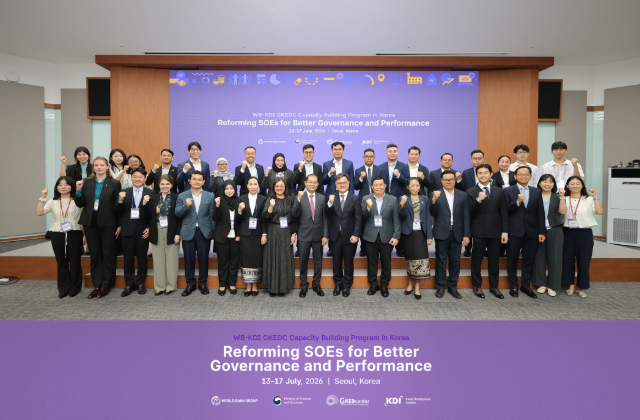
From July 13 to 17, 2026, the KDI Global Knowledge Exchange and Development Center (GKEDC), in partnership with the World Bank Group, successfully hosted the World Bank-KDI GKEDC Capacity-Building Program on State-Owned Enterprises (SOEs).
The program was designed to support ongoing SOE reform efforts in Cambodia, Lao PDR, and the State of Sarawak, Malaysia, where governments are actively pursuing legal and institutional reforms and developing SOE reform strategies. Drawing on Korea’s experience in SOE policy and reform and its institutional implications, the program focused on key reform priorities of the participating governments, including SOE ownership and governance, fiscal risk management, performance evaluation, and public disclosure.
In particular, the program was structured to strengthen participants’ practical policy capacity by enabling them to assess their respective SOE reform contexts, key challenges, and priority issues through country diagnostics, and to translate the insights gained from expert sessions, a site visit, policy dialogues, and country workshops into concrete and actionable reform measures.
[Expert Sessions] Key SOE Reform Agendas and Korea’s Policy Experience
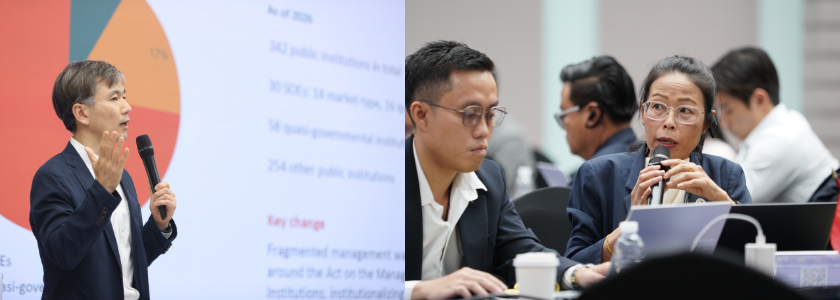
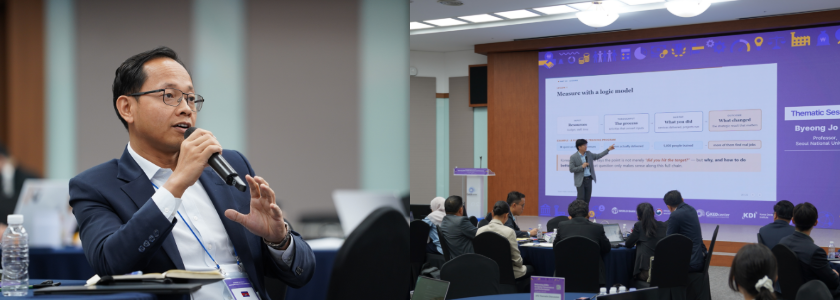
The first three days of the program consisted primarily of a framing session and thematic sessions led by experts. The framing session explored the role of SOEs and related government policies throughout Korea’s economic development process, providing participants with a broader understanding of the context and background of Korea’s SOE policies for the thematic sessions, site visit, and policy dialogues that followed.
A total of six thematic sessions were conducted, covering ▲SOE ownership and governance, ▲transparency and accountability, ▲fiscal risk management, ▲SOE performance evaluation, ▲government-SOE financial relations, and ▲public-sector auditing.
On the fourth day, an OECD expert presented key revisions to the 「OECD Guidelines on Corporate Governance of State-Owned Enterprises」 and discussed major directions for future SOE policy.
Throughout the expert sessions, participants showed particular interest in Korea’s classification system for public institutions and the Act on the Management of Public Institutions, the division of responsibilities between the central ownership entity and line ministries, approaches to balancing the public mandate, profitability, and financial soundness of SOEs, the design and operation of the performance evaluation system, and methods for collecting and verifying information for public disclosure. These topics led to active discussions and Q&A throughout the sessions.
[Site Visit] Incheon International Airport Corporation
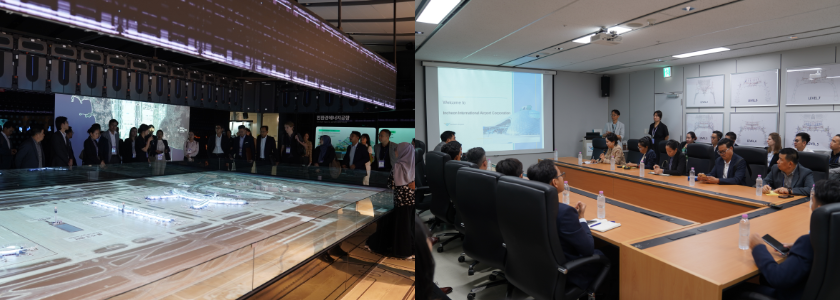
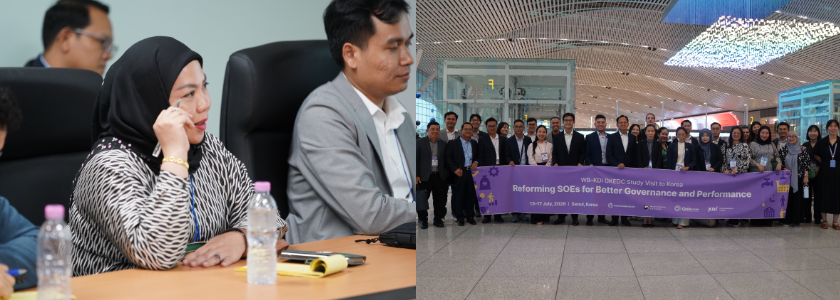
On the afternoon of the second day, participants visited Incheon International Airport Corporation (IIAC) to examine the investment planning, financing, performance evaluation, and public service delivery of a large-scale infrastructure SOE.
Participants first received an overview of the phased construction and expansion of Incheon International Airport. They then actively engaged in a Q&A session with members of IIAC’s performance evaluation team on the corporation’s governance, performance management, medium- and long-term investment plans, and operational practices. A tour of major airport facilities followed, allowing participants to see how the SOE management systems discussed in the expert sessions are applied in practice.
[Policy Dialogue] Sharing Korea’s Experience in SOE Management and Reform
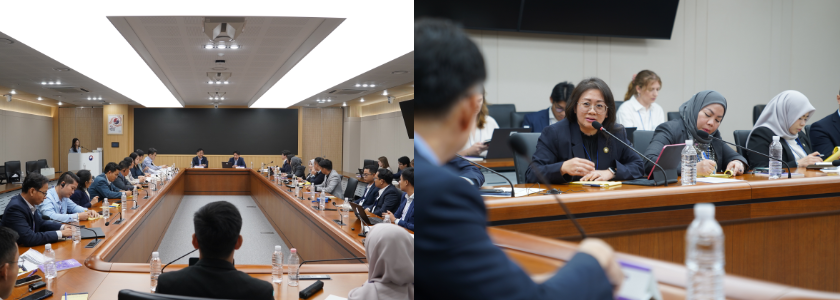
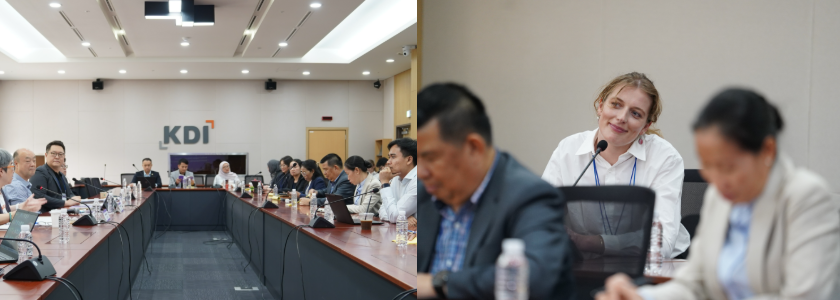
The fourth day of the program featured a series of policy dialogues in Sejong with representatives from the Ministry of Finance and Economy (MOFE), the Ministry of Climate, Energy and Environment (MCEE), the Ministry of Land, Infrastructure and Transport (MOLIT), KDI Public and Private Infrastructure Investment Management Center (PIMAC), and Korea Water Resources Corporation (K-water).
The dialogue with the MOFE focused on Korea’s public institution ownership management, fiscal discipline, performance evaluation, and coordination mechanisms for SOE reform.
In the subsequent policy dialogue with line ministries, participants engaged in a Q&A session with officials from MCEE and MOLIT on the division of responsibilities between the central ownership entity and relevant line ministries and on how their policy objectives are reflected in SOE management and business operations, drawing on the cases of Korea Electric Power Corporation (KEPCO) and Korea Railroad Corporation (KORAIL).
The final dialogue with K-water and PIMAC shared practical experience in public service delivery, financial management, and accountability for management performance.
Through the policy dialogue sessions, participants engaged with Korean counterparts on practical issues arising from their own institutional contexts and SOE reform challenges.
[Action Plans] Developing Country-Specific SOE Reform Priorities
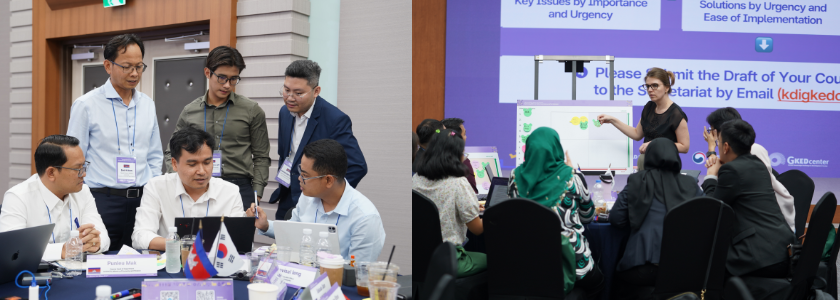
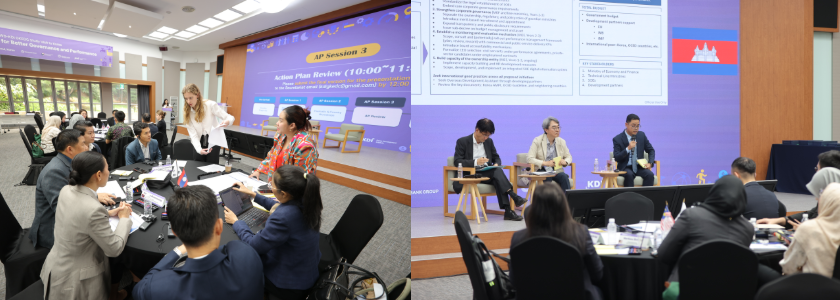
A key component of the program was the development of country-specific action plans, designed to connect the knowledge gained from expert sessions and institutional visits with actual reform priorities in the participating countries.
On the first day, participants presented country diagnostics prepared in advance, covering the current state of SOEs, long-term policy objectives, key challenges and their causes, and limitations of existing policies. On the third day, thematic and country workshops focused on key reform areas such as ownership and governance, financial soundness, and performance management, helping each delegation further define its reform priorities and possible courses of action.
On the fifth day, participants reviewed key issues including SOE ownership and oversight, disclosure and fiscal risk management, and performance evaluation. Based on feedback from Korean experts, World Bank representatives, and other participating delegations, they further refined the feasibility and sequencing of their action plans.
The program went beyond introducing Korea’s SOE management system by supporting participating countries in developing reform measures suited to their own institutional and policy contexts. Building on the positive feedback and high level of participant satisfaction with this pilot program, KDI GKEDC plans to continue its cooperation with the World Bank.
We reject unauthorized collection of email addresses posted on our website by using email address collecting programs or other technical devices. To access the email address, please type in the characters exactly as they appear in the box below.
Please enter the security code to prevent unauthorized information collection.