
News 2026 KDI-OECD Global Forum on Development Cooperation
2026 KDI-OECD
Global Forum on Development Cooperation Held
Whole-of-Government Co-ordination for Development Co-operation:
from Institutional Design to Effective Policy Practice
-
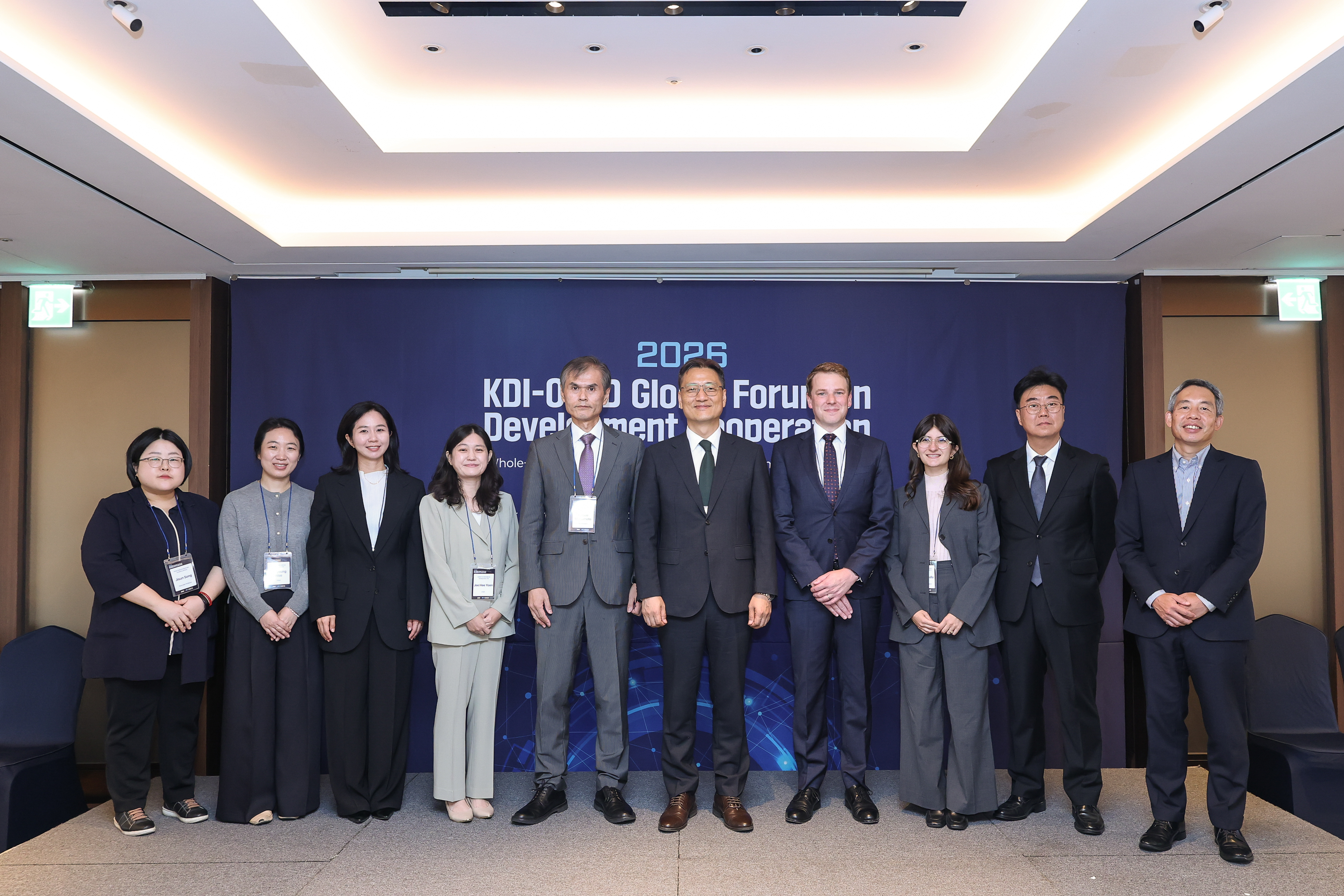
On September 17, 2026, the Center for International Development (CID) of KDI hosted the ‘2026 KDI-OECD Global Forum on Development Cooperation’ together with the OECD Development Co-operation Directorate (DCD) at the Grand Lotte Hotel Seoul. Under the theme “Whole-of-Government Co-ordination for Development Co-operation: from Institutional Design to Effective Policy Practice,” the Forum was held to share the key findings of the joint research conducted by KDI and the OECD DCD, and to facilitate the policy dialogue and peer learning among DAC member countries.
Opening
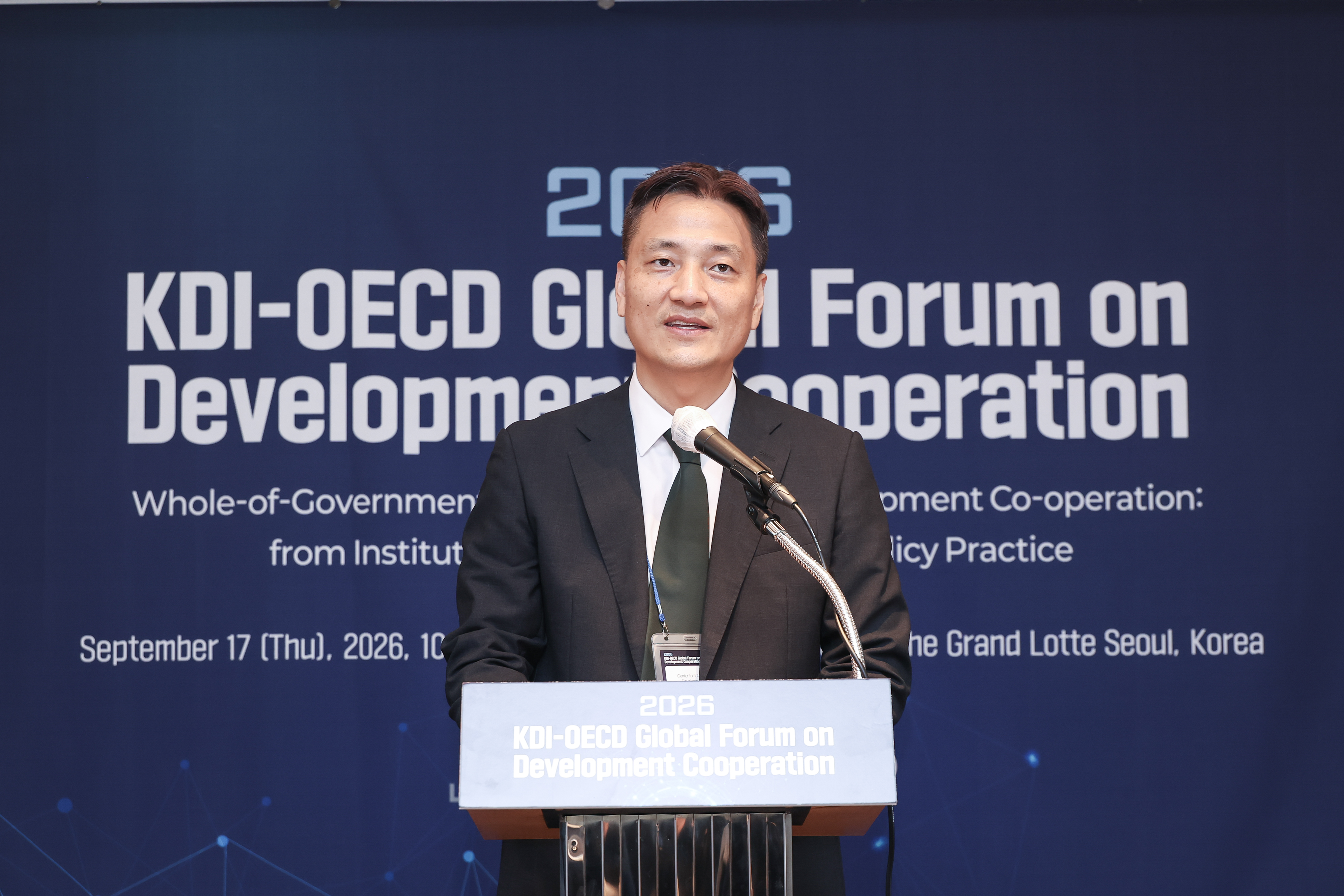
In his opening remarks, Jungwook Kim, Executive Director of KDI CID, noted that development cooperation today faces interconnected challenges such as climate change, digital transformation, health and security, which cannot be addressed by the efforts of a single ministry or agency alone. He emphasized that a whole-of-government approach is fundamentally about linking policy, budgeting, implementation, and resource management around shared goals and strategies across ministries and agencies.

In his welcoming remarks, Robin Ogilvy, Head of the Reforms and Partnerships for Development Impact Division at the OECD DCD, highlighted that, amid a shrinking ODA environment, whole-of-government co-ordination should extend beyond ODA to encompass a broader range of policy instruments, including finance and technology.

In his congratulatory remarks, Yong Sik Kwon, Director General of Development Policy and Planning Bureau at the Office for Government Policy Coordination, noted that Korea established its 4th Basic Plan for International Development Cooperation in February 2026, with a vision of promoting universal values and ensuring mutual prosperity, and emphasized the importance of institution’s effective function in practice.

In his keynote address, Katsuo Matsumoto, Vice President of the Japan International Cooperation Agency (JICA), emphasized the need for an integrated approach to development cooperation in addressing complex challenges such as the Sustainable Development Goals (SDGs), climate change, and artificial intelligence (AI). He stated that in a multiplex world, development cooperation should move toward “knowledge co-creation,” in which diverse actors learn from one another as equal partners.
Session 1: Governing Development Co-ordination — Institutional Architectures and Co-ordination Mechanisms across DAC Members
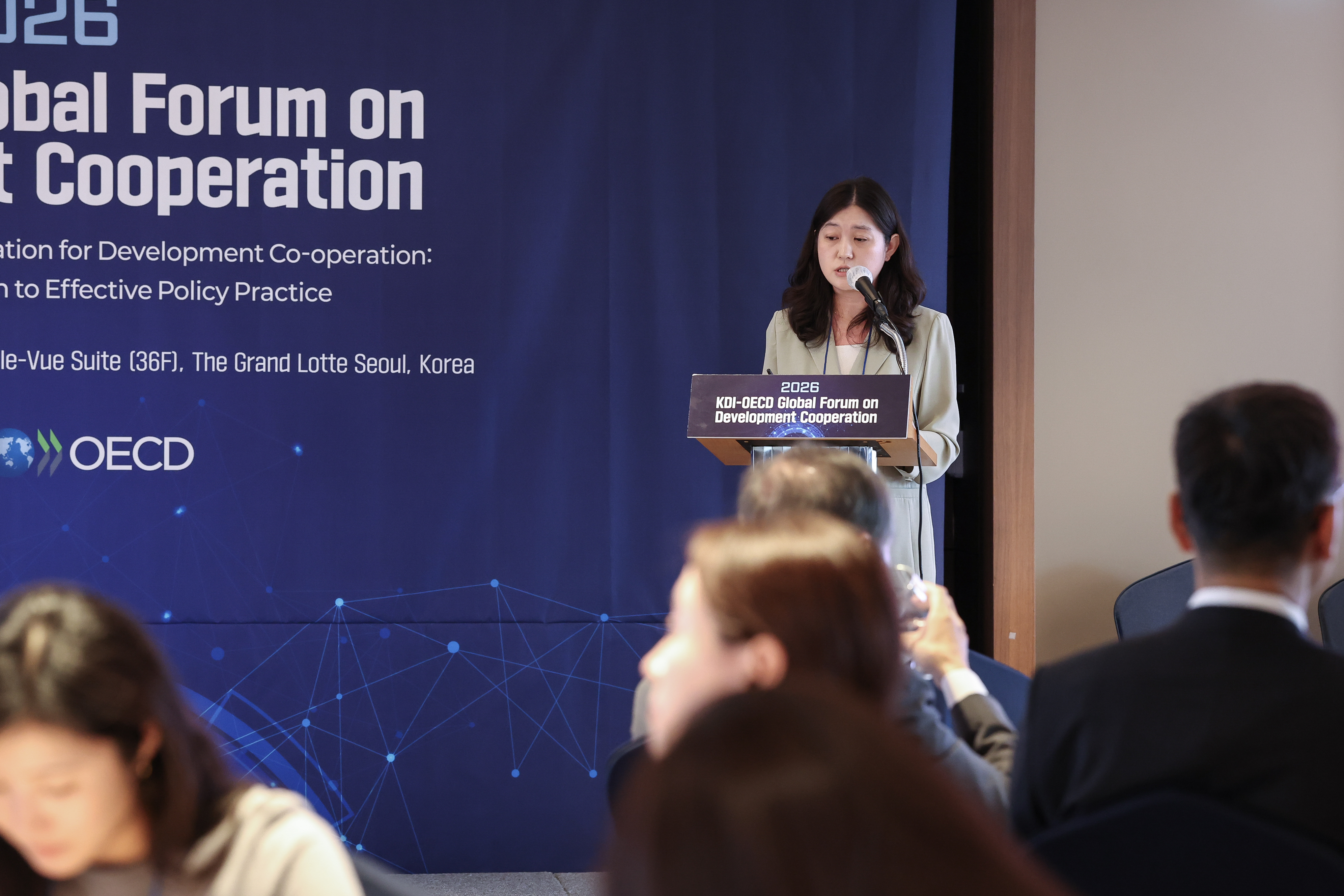
Jee Hee Yoon, Head of the Division of Development Research at KDI CID, presented “Whole-of-Government co-ordination in ODA: Comparative Cases of Donor Countries,” a comparative analysis of the co-ordination systems of five major donors: Japan, France, the United Kingdom, Germany, and Spain. Using an analytical framework with three dimensions (legal and institutional foundations, co-ordination mechanisms, and evaluation and performance management), she examined each country’s institutional features, identified common functions of effective systems, and drew policy implications.

Anjeza Llulla, Junior Policy Analyst at the OECD DCD, presented “Whole-of-Government Approaches to Development Co-operation: Insights and Lessons from DAC Members’ Practice,” introducing the key findings of an OECD peer-learning exercise. She explained that there is no single best model for whole-of-government co-ordination, and presented four governance types, classified according to the institutional environments of DAC members: (1) Centralised single ministry, (2) Delegated implementation, (3) Dual institutional anchor, and (4) Managed pluralism, together with their key implications.
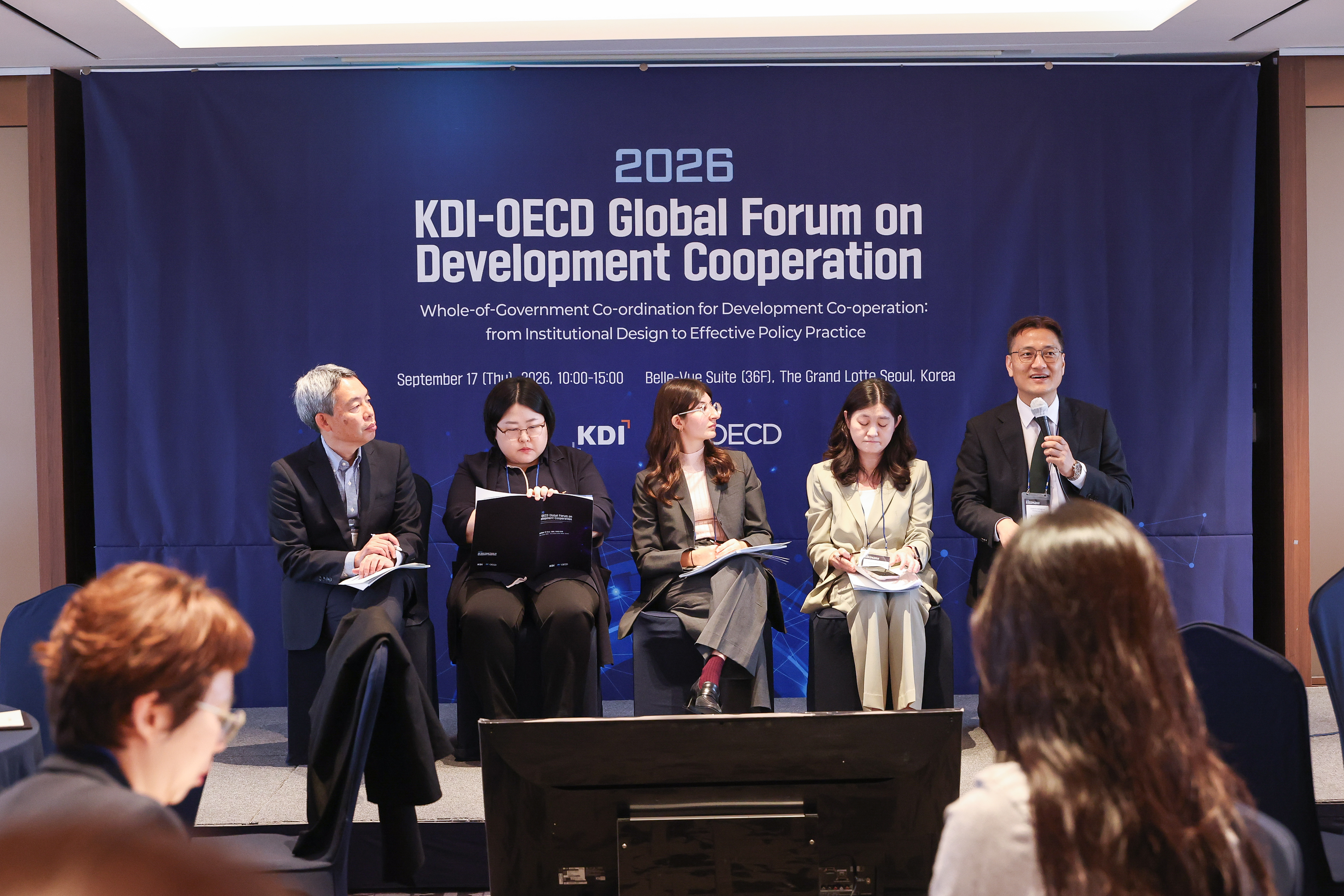
In the panel discussion, Professor Jisun Song of the Korea National Diplomatic Academy (KNDA) emphasized that a whole-of-government approach is essential not only for development effectiveness but also for achieving national interests, encompassing security and soft power, as well as for establishing a clearer foreign policy direction.
Keiji Katai, Deputy Director of the JICA Ogata Sadako Research Institute for Peace and Development, introduced Japan’s whole-of-government co-ordination system, presenting how JICA has evolved into an integrated implementing agency by feeding field-level knowledge back into policy and strengthening linkages with other ministries.
Stephan Klingebiel, Head of Inter- and Transnational Cooperation at the German Institute of Development and Sustainability (IDOS), outlined the unique features and limitations of Germany’s development cooperation governance, stating that a whole-of-government approach requires carefully designed systems that reconcile the mutual interests of each ministry.
Session 2: Whole-of-Government Co-ordination in Practice — Lessons from Country Case Studies
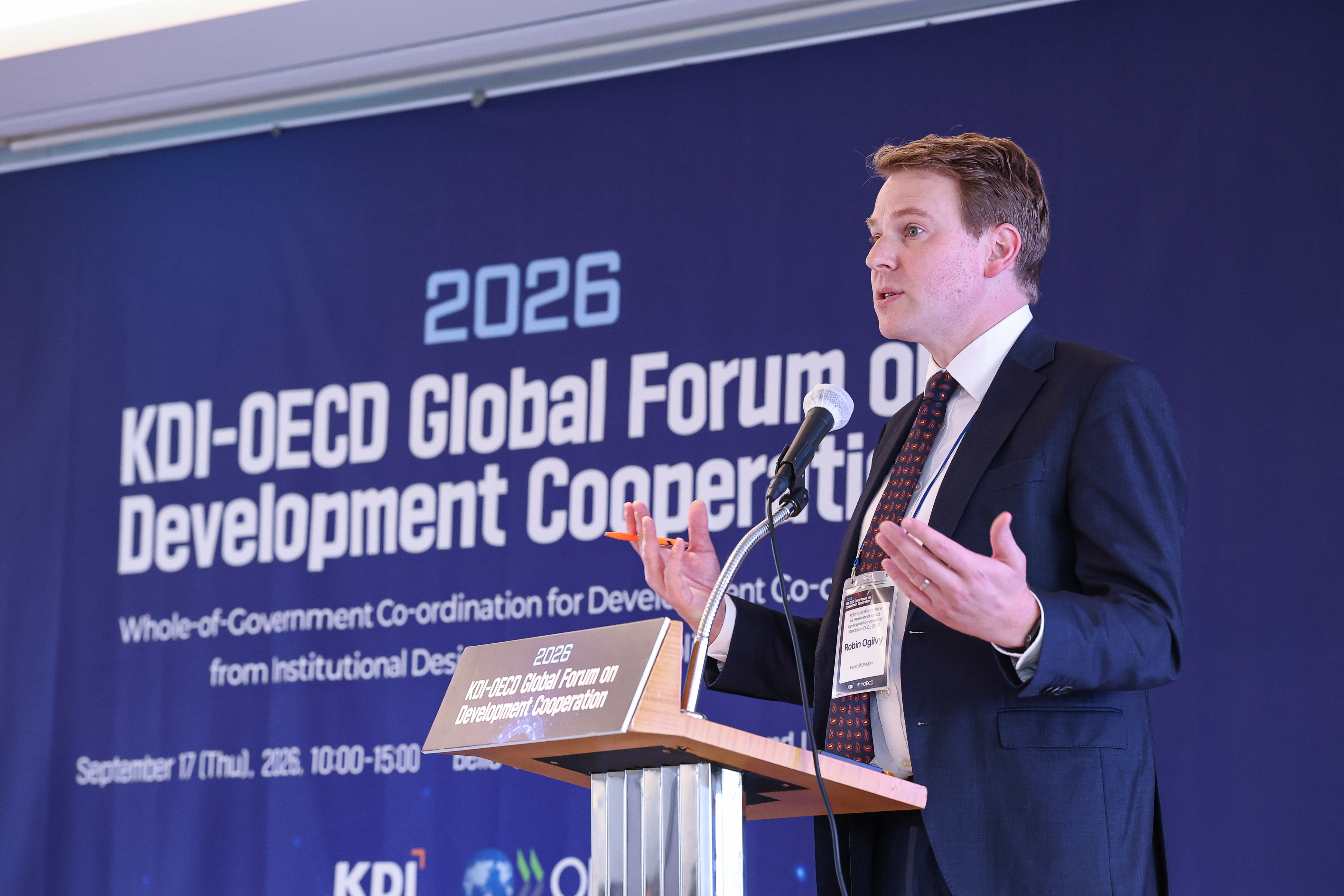
Robin Ogilvy, Head of the Reforms and Partnerships for Development Impact Division at the OECD DCD, presented the key findings of the country case studies, explaining that Session 2 aims to examine how institutional mechanisms actually function in practice and how strategic goals are translated into the work of ministries and institutions. He emphasized that there is no single institutional model applicable to successful co-ordination, and that lessons must be drawn from approaches suited to each country’s structure and circumstances.
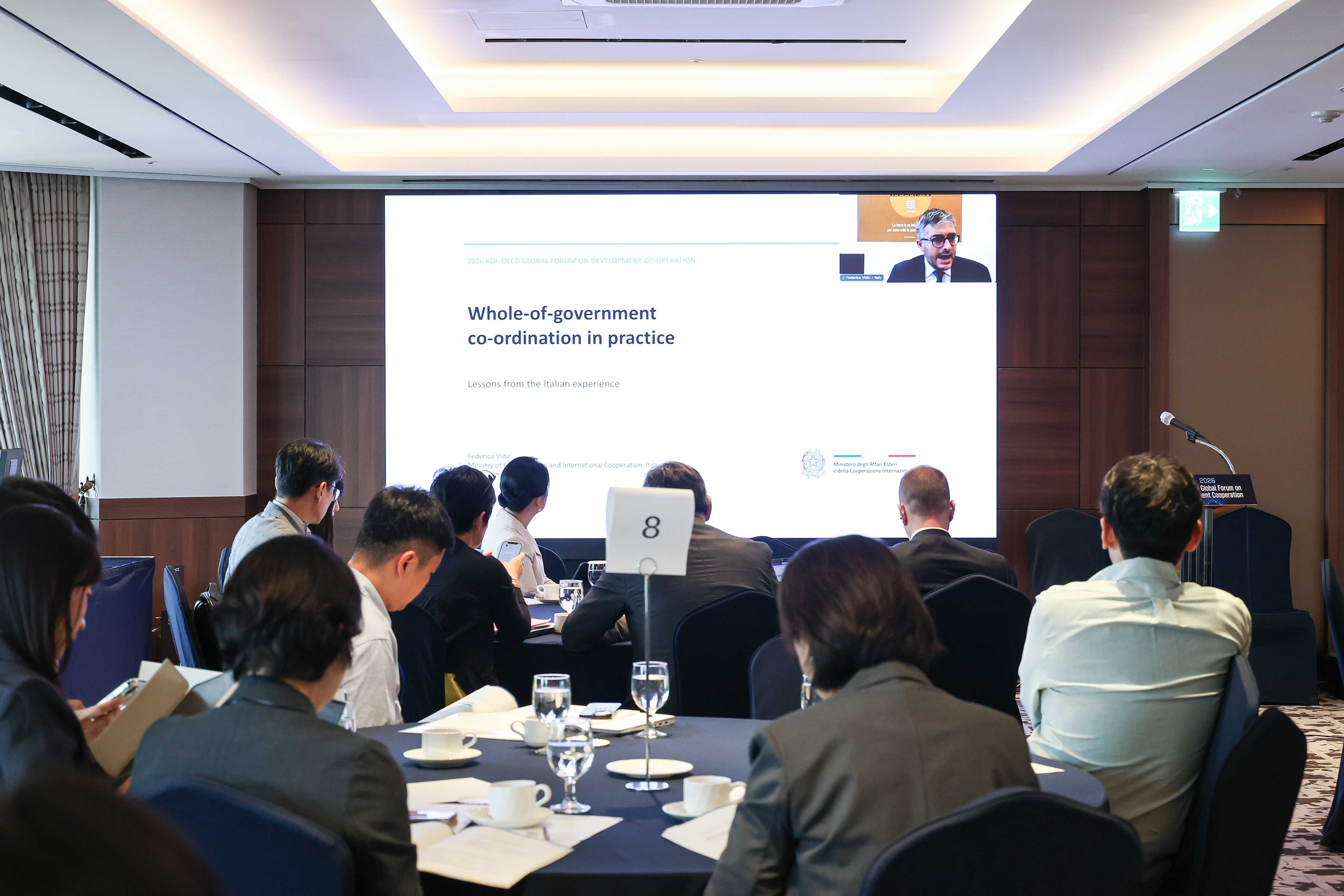
Federico Vidic, Counsellor at the Italian Ministry of Foreign Affairs and International Cooperation, introduced Italy’s delegated implementation model, based on Law No. 125 of 2014, stated that different institutions must be linked at different stages of development cooperation, since no single body can oversee all co-ordination within a complex system.

Nina Lenardi? Purkart, Minister Plenipotentiary at Slovenia’s Ministry of Foreign and European Affairs, presented Slovenia’s co-ordination system, in which the Ministry serves as the national coordinator while planning, implementation, and monitoring are carried out through a Permanent Coordination Group and an Expert Council, and noted that limited human and financial resources remain a key challenge for Slovenia.

Seungheon Han, Research Fellow at the Korea Institute of Public Administration (KIPA), presented Korea’s whole-of-government co-ordination system, centered on the Committee for International Development Cooperation (CIDC) and a dual delivery structure for grants and loans. She stated that, for more effective co-ordination, the challenge ahead is to design projects that combine the instruments of different institutions around shared goals from the earliest stage of project planning.
Session 3: Whole-of-Government Co-ordination across Key Development Themes — Climate Change and Private Sector Engagement

Hyeyoung Woo, Head of the Evaluation Team at KDI CID, presented on climate change, outlining the current state of Korea’s climate ODA governance and co-ordination mechanisms. She emphasized the need to more closely connected strategy, budgeting, implementation, and evaluation, and to strengthen linkages with partner countries’ climate priorities. She also highlighted the need to establish an evaluation framework that reflects the characteristics of climate ODA.

Rachel Sberro-Kessler, Policy Analyst at the OECD DCD, presented on private sector engagement, proposing approaches to an effective co-ordination among the diverse actors of development cooperation involved. She also highlighted key implications for effective co-ordination, including establishing inter-institutional co-operation mechanisms and clearly defining each institution’s mandate and decision-making authority.
In the Reflections from the Thematic Discussions, Robin Ogilvy, Head of the Reforms and Partnerships for Development Impact Division at the OECD DCD, emphasized that effective whole-of-government co-ordination requires a clear linkage of shared goals, responsibility, and resources, and stated that it is essential to establish mechanisms for managing and reconciling conflicting relationships across different institutions.
Closing
In his closing remarks, Jungwook Kim, Executive Director of KDI CID, emphasized that whole-of-government co-ordination requires building consensus to align ministries, institutions, and stakeholders with differing perspectives and roles around a common direction, and that while this process demands time and effort, it is an essential step for enhancing the effectiveness of development cooperation. He also stated that sustaining this effort requires public and societal support for the purpose and outcomes of ODA, and that, as partner countries’ needs and international discussions can also serve as grounds for advancing whole-of-government co-ordination, cooperation should continue to be pursued through joint research and activities among institutions.Written by: Jieun Park, Research Associate, Division of Development Research, Center for International Development (CID), +82-44-550-4421, jieunp@kdi.re.kr
We reject unauthorized collection of email addresses posted on our website by using email address collecting programs or other technical devices. To access the email address, please type in the characters exactly as they appear in the box below.
Please enter the security code to prevent unauthorized information collection.