
News KDI Hosts「2026 KDI Journal of Economic Policy Conference」
KDI Hosts 「2026 KDI Journal of Economic Policy Conference」
-
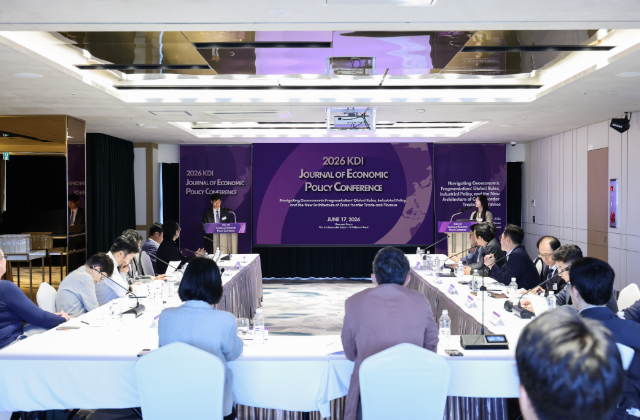
On June 17, 2026, KDI hosted the 2026 KDI Journal of Economic Policy Conference at the Namsan Room (19F) of The Ambassador Seoul – A Pullman Hotel, under the theme "Navigating Geoeconomic Fragmentation: Global Rules, Industrial Policy, and the New Architecture of Cross-border Trade and Finance." The conference brought together leading academics and policy experts from Korea and abroad to discuss policy responses across key areas — including industrial policy, supply chain restructuring, and the digital economy — amid rising geopolitical tensions and deepening fragmentation in trade, investment, and financial flows.
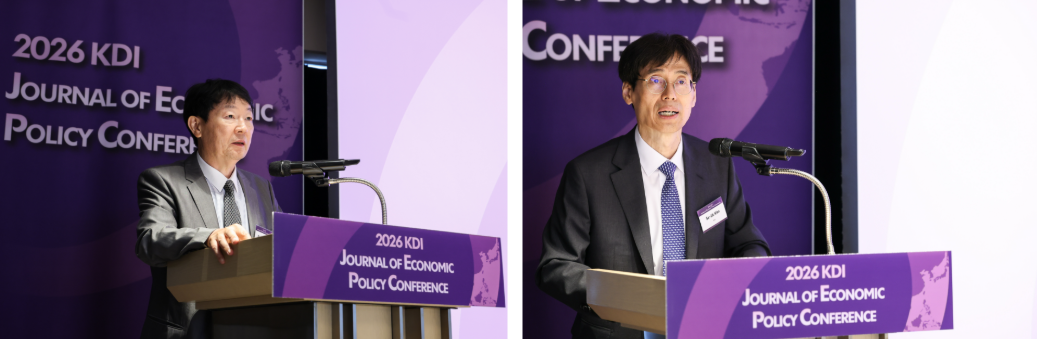
At the opening ceremony, KDI President Se-Jik Kim underscored the importance of evidence-based policymaking in a period of profound transformation in the global economic order. KDI JEP Editor-in-Chief Kwanho Shin expressed his hope that the conference would serve as a platform for sharing cutting-edge research and drawing forward-looking policy implications for the challenges facing the Korean economy.
Session 1: Keynote Speech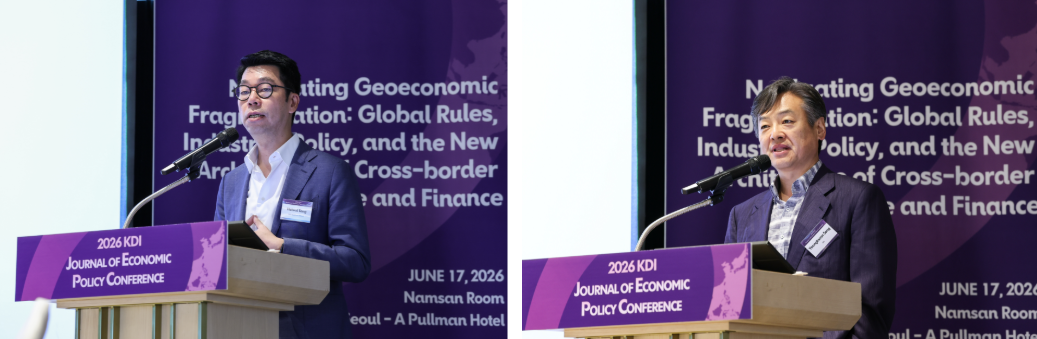
Session 1 featured a keynote address by Professor Heiwai Tang of the University of Hong Kong Business School. Professor Tang argued that recent shifts in international trade are better characterized as "reglobalization" — a geopolitically driven reshuffling of trading partners rather than the dismantling of supply chains — and showed that this reallocation is occurring selectively depending on product characteristics such as supplier concentration and R&D intensity. Yeongkwan Song of KDI served as discussant, and Ju Hyun Pyun of Korea University chaired the session.
Session 2: Innovation and R&D Policy in the Changing World of Globalization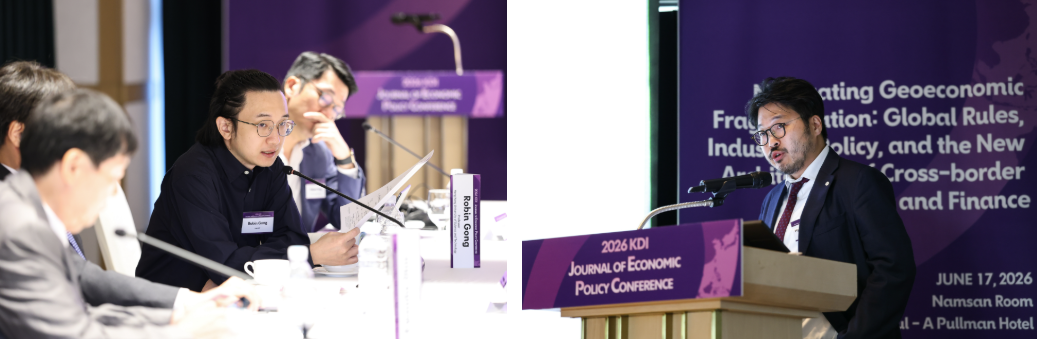
Professor Robin Gong of HKUST argued that rising import competition from China does not merely reduce firm-level R&D, but triggers a reallocation of R&D resources toward more productive and profitable firms within industries, such that no adverse effect on aggregate R&D is observed. Dr. Hyoungmin Han of KIEP showed that deeper trade linkages with China stimulate innovation among Korean manufacturing firms — as evidenced by increased patent applications — but that this effect is concentrated in sectors where Korean products hold a quality advantage over Chinese counterparts and among large firms, with more limited benefits for SMEs. Jaerim Choi of Yonsei University and Woo Jin Choi of Korea University served as discussants, and Jaewoo Lee of the IMF and Columbia University chaired the session.
Session 3: Designing Effective Innovation and Digital Strategies: R&D Subsidies, FDI, and Spillovers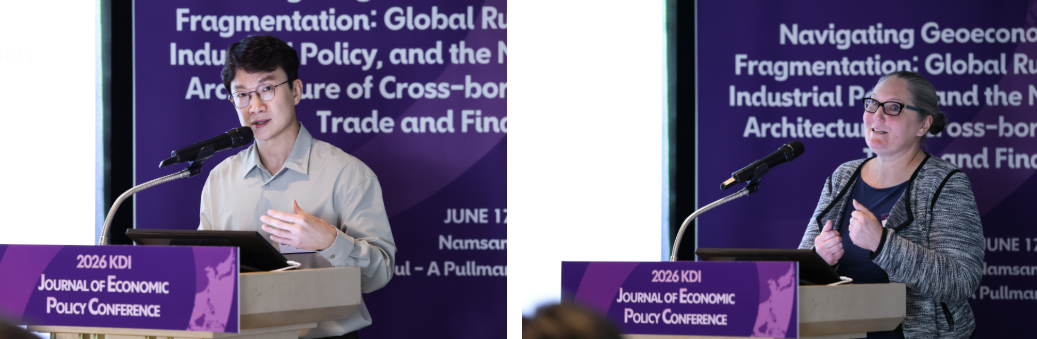
Dr. Sunghoon Chung, Senior Fellow at KDI, presented evidence that R&D investment generates even larger effects on export entry and export value for service firms than for manufacturers, and called for extending R&D support policies to the service sector on an equal footing with manufacturing. Professor Jennifer Poole of American University showed that Korean firms with outward foreign direct investment experience are more likely to adopt digital technologies — including AI, robotics, and cloud computing — and that this effect is more pronounced in services than in manufacturing. Youngjin Yun of Hanyang University and Sangyup Choi of Yonsei University served as discussants, and Chin Hee Hahn of Gachon University chaired the session. The wrap-up session was moderated by JaeBin Ahn of the IMF, who brought the day's discussions to a close.
The wrap-up session was moderated by JaeBin Ahn of the IMF, who brought the day's discussions to a close.
We reject unauthorized collection of email addresses posted on our website by using email address collecting programs or other technical devices. To access the email address, please type in the characters exactly as they appear in the box below.
Please enter the security code to prevent unauthorized information collection.