|
|
What's Up Monthly
August 21, 2026 | vol. 36
|
|
|
|
In today's newsletter:
- KDI Economic Outlook: Update 2026.08
- 2026 International Conference on Economic Education
- Video Report: Rebuilding Scale-up Support Policies
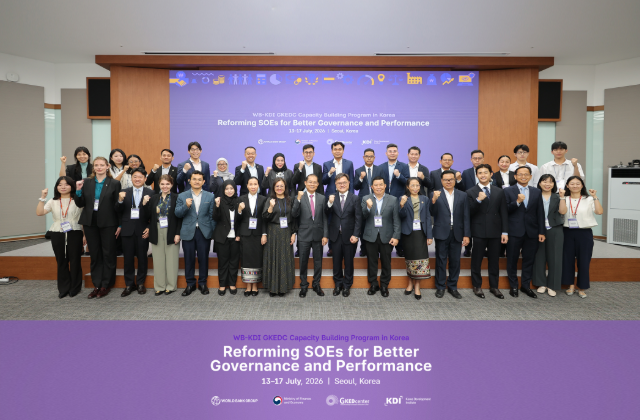
- WB-KDI GKEDC Capacity Building Program on Reforming SOEs
|
|
|
|
Updated KDI Economic Outlook: August 2026
Note: KDI releases its economic outlook every May and November, and provides revised forecasts reflecting changing economic conditions every February and August.
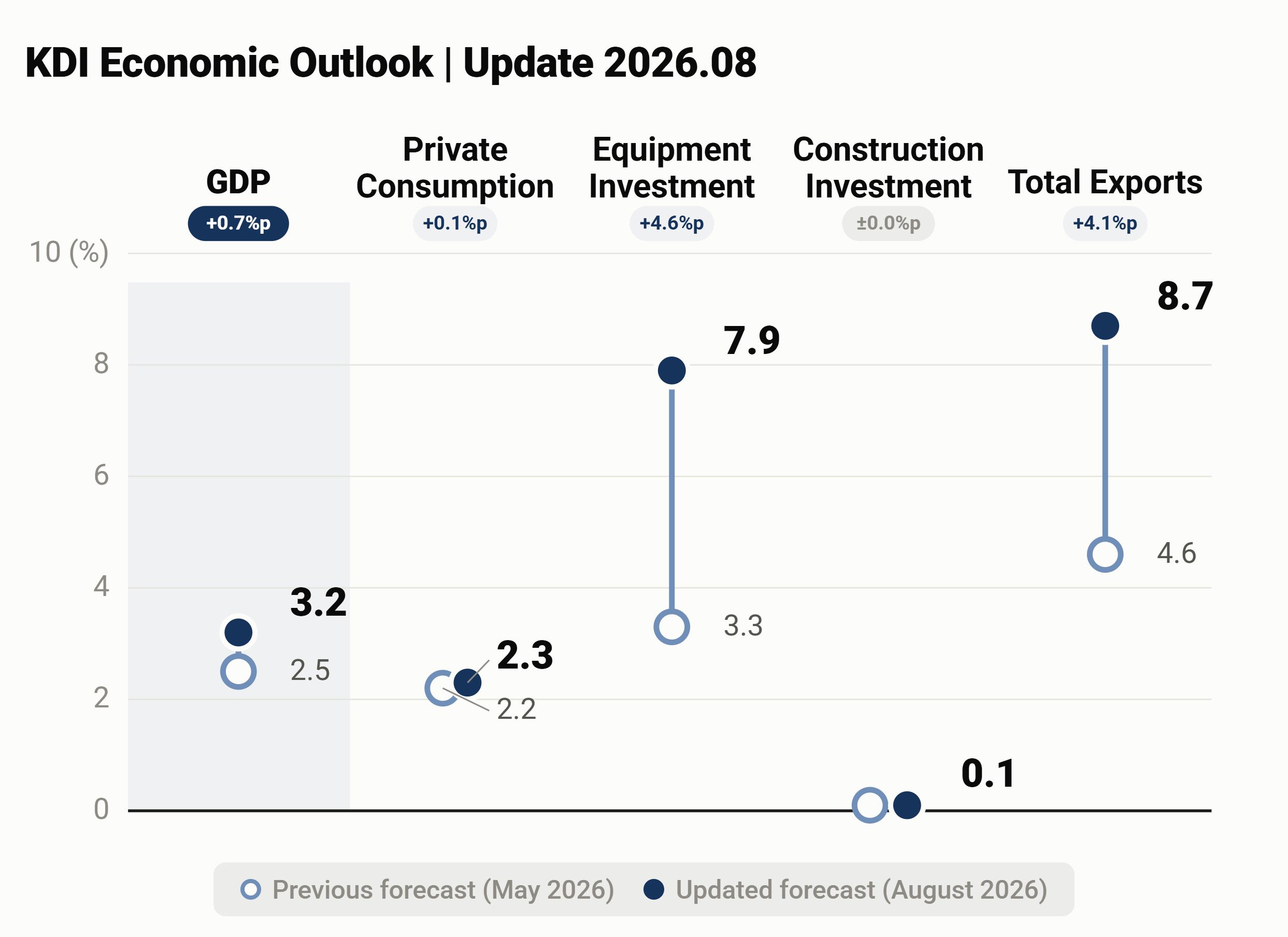
Korea's economy is projected to grow by 3.2% in 2026, up 0.7%p from KDI's May 2026 forecast (Previous Outlook: 2.5%). Growth is expected to moderate to 2.2% in 2027, still an upward revision of 0.5%p from the previous forecast. This upgrade mainly reflects a stronger-than-expected boom in global semiconductor demand, which has lifted exports, equipment investment, and the current account surplus, while construction investment remains subdued amid sluggish regional housing markets and rising construction costs.
|
|
|
Key Projections
- GDP Growth: Increasing from the May forecast of 2.5% to 3.2% in 2026, before moderating to 2.2% in 2027.
- Private Consumption: Rising to 2.3% in 2026 from May's forecast of 2.2%, before easing to 2.0% in 2027 as income gains stay concentrated in semiconductors.
- Equipment Investment: Accelerating to 7.9% in 2026 from May's forecast of 3.3%, led by semiconductor investment amid the global AI boom, before easing to 7.0% in 2027.
- Construction Investment: Unchanged from May's forecast of 0.1% in 2026 amid weak regional housing markets and higher costs, before recovering to 2.7% in 2027.
- Exports: Export volume accelerating to 8.7% in 2026 from May's forecast of 4.6% on strong global AI investment, before moderating to 5.0% in 2027.
- Current Account: Expanding to USD 359.7 billion in 2026 from May's forecast of USD 239.0 billion, and to USD 356.2 billion in 2027, on higher chip prices.
- CPI Inflation: Unchanged from May's forecast of 2.7% in 2026 on higher oil prices, before easing to 2.2% in 2027 as oil prices stabilize.
- Employment: Job gains cut to 110,000 in 2026 from May's forecast of 170,000 before widening to 200,000 in 2027 on broader domestic demand and base effects.
Korea's economy remains highly dependent on global semiconductor demand, so shifts in the semiconductor cycle could add volatility to the broader economy: growth could slow rapidly if AI-related investment demand weakens or intensifying competition among semiconductor-producing countries erodes Korean firms' global market share, while it could exceed the forecast if AI investment demand stays strong and domestic firms expand supply capacity faster than expected.
Persistent uncertainty over U.S. tariff policy, a renewed escalation of conflict in the Middle East, and heightened stock market volatility could also constrain the improvement in economic activity and private consumption.
|
|
|
Rethinking Economic Education for the AGI Era: 2026 International Conference on Economic Education
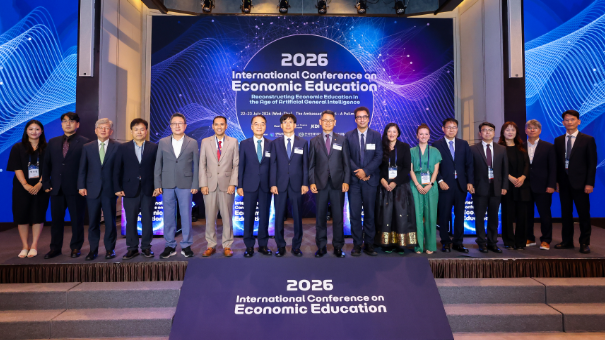
On July 22–23, the Ministry of Finance and Economy and KDI co-hosted the "2026 International Conference on Economic Education," drawing around 300 participants under the theme "Reconstructing Economic Education in the AGI Era." Setting the tone was a keynote by Stéphan Vincent-Lancrin, Deputy Head of the OECD Centre for Educational Research and Innovation (CERI), who noted that generative AI can improve students' problem-solving and creative writing in the short term, but also carries limitations that can erode collective originality. He pointed to research on "Tutor CoPilot" showing how AI support can help less experienced teachers give students effective real-time feedback, and proposed using an AI-generated dataset on international student mobility to teach demand, supply, and price dynamics. The keynote framed the international discussion that followed among educators from the United States, the Netherlands, Malaysia, and Korea.
That vision took concrete shape in sessions on applying AI in the field, from a talk on investment-era financial literacy by Oh Keonyoung of Shinhan Premier Pathfinder to parallel tracks of classroom and edtech case studies, closing with a special lecture on active learning by Taejae University President Yeom Jaeho. Spanning perspectives from global research to Korean classrooms, the two-day conference reflected a shared push to embed AI thoughtfully into the future of economic education.
|
|
|
|
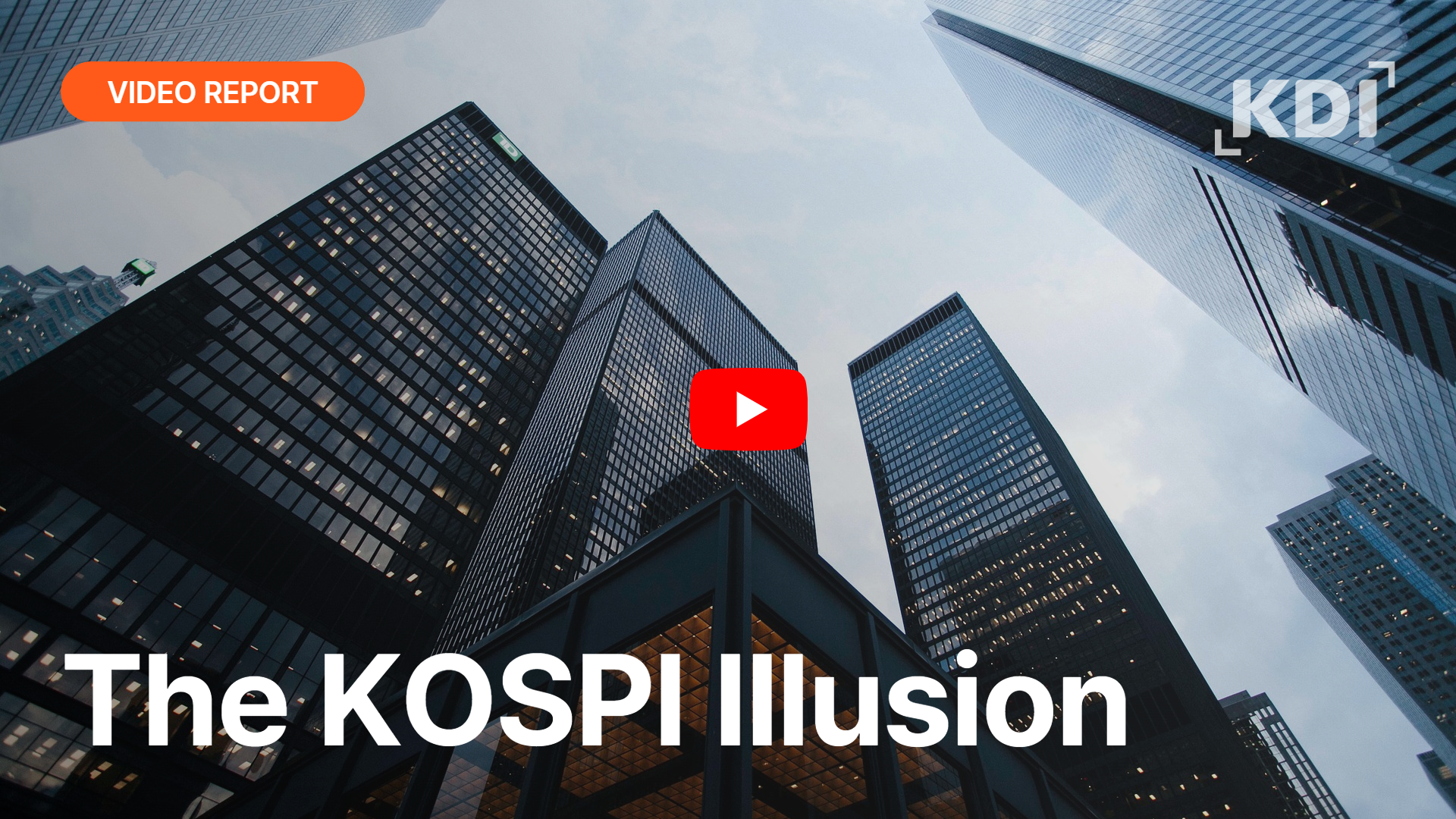
Why do so many Korean firms lose momentum just as they should be scaling up? This video shows that high-growth firms drive about half of Korea's revenue growth and almost 40 percent of job creation, yet their share among mid-stage firms has fallen from 14.4 percent to 7.8 percent over the past decade or so. It finds that the drivers of growth differ sharply by sector, with manufacturers scaling through R&D, AI adoption, and exports, while service firms rely more on brand strength and design capabilities. The findings call for an integrated approach that diagnoses each firm's specific bottlenecks and delivers tailored policy packages, rather than relying on generic, R&D-centric support.
|
|
|
|
Strengthening State-Owned Enterprise Reform: The World Bank-KDI GKEDC Capacity-Building Program
The World Bank-KDI GKEDC Capacity-Building Program on State-Owned Enterprises (SOEs), hosted by the KDI Global Knowledge Exchange and Development Center (GKEDC) in partnership with the World Bank Group, was held from July 13 to 17, 2026, to support ongoing SOE reform efforts in Cambodia, Lao PDR, and the State of Sarawak, Malaysia. Drawing on Korea's experience in SOE policy and reform, the program combined expert-led sessions on SOE ownership and governance, fiscal risk management, performance evaluation, and public disclosure with a site visit to Incheon International Airport Corporation and policy dialogues in Sejong with Korea's Ministry of Finance and Economy and other government agencies.
Building on country diagnostics and workshops held throughout the week, each delegation developed a country-specific action plan for SOE reform, and KDI GKEDC, encouraged by strong participant satisfaction with this pilot program, plans to continue its cooperation with the World Bank.
|
|
|
|
Copyright © Korea Development Institute.
All Rights Reserved.
263, Namsejong-ro, Sejong-si 30149
|
|
|
|
|