
정책연구시리즈 도시규모분포에 대한 연구: 분포결정요인과 공간정책의 후생효과 2025.12.31
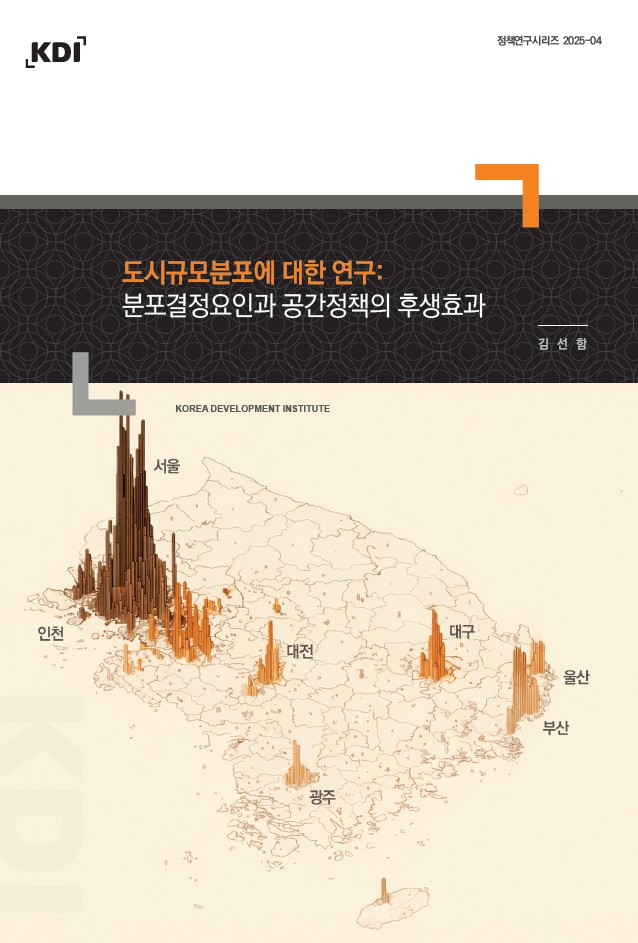
Series No. 2025-04
정책연구시리즈
도시규모분포에 대한 연구: 분포결정요인과 공간정책의 후생효과
#지역경제
2025.12.31
-
김선함 부연구위원
 프로필
프로필
- 국문요약
-
수도권 인구집중과 그 대응은 우리나라 최대 현안 중 하나이다. 본 연구는 수량적 공간일반균형모형을 활용하여 우리나라 도시규모분포의 결정요인을 구조적으로 추정하고, 지역정책의 효과와 현행 인구분포의 최적성을 정량적으로 분석함으로써 지역발전정책의 접근법과 가능성을 검토한다.
전국 161개 시군을 도시로 정의하고 2005~19년 자료를 분석한 결과, 동 기간 수도권 인구 비중 증가를 추동한 요인은 총요소생산성 격차였으며, 쾌적도와 인구수용비용 등 다른 요인은 이를 억제하는 방향으로 작동했다. 특히 2010년대에 발생한 거제, 구미, 울산 등 비수도권 제조업 도시의 총요소생산성 하락이 수도권 집중을 가속화했다. 2010년대 인구분산정책, 즉 혁신도시와 세종시 건설은 인프라 개선을 통해 해당 도시 인구를 일정 수준 성장시켰으나, 총요소생산성 개선이 부진하여 도시 성장 및 수도권 집중 완화 효과는 제한적이었다.
비수도권 7개 도시를 권역별 거점도시로 선정하여 육성하는 가상실험 결과, 수도권 비중을 2000년 수준으로 낮추기 위해서는 상당한 수준의 총요소생산성 및 인프라 효율성 개선이 필요하다. 이를 후생손실 없이 정당화할 수 있는 정책비용 상한 폭은 제한적이다. 이러한 투자로도 수도권 비중은 여전히 인구의 절반에 가깝다. 최적공간정책 분석 결과, 집적경제의 효율적 활용을 위해서는 전국 대도시로의 인구집중이 권고된다. 이때 서울뿐 아니라 부산 대구 광주 등 비수도권 대도시로도 인구가 재배치되어 수도권 집중은 2019년 수준에서 더 심화되지 않을 수 있다.
이 결과는 세 가지 시사점을 제공한다. 첫째, 수도권 집중의 핵심 요인은 생산성 변화로서, 지역발전정책이 실효성을 갖기 위해서는 생산성을 실질적으로 향상시키는 정책수단의 개발이 선행되어야 한다. 둘째, 낙관적 시나리오에서도 수도권 비중을 43% 이하로 낮추기 어려우며, 정책개입에는 선택과 집중이 요구된다. 셋째, 최적공간정책은 대도시 집중을 권고하나 이것이 반드시 수도권 집중 심화로 연결되지는 않는다. 수도권 집중 심화 방지가 목적이라면 권역별 거점도시 육성을 통한 선제적 공간구조 재편이 유효할 수 있다.
- 영문요약
-
This study employs a quantitative spatial general equilibrium model to estimate the determinants of city size distribution in South Korea and quantify the effects of regional policies, evaluating the optimality of its current population distribution.
Defining 161 cities and counties nationwide as cities and analyzing data from 2005 to 2019, the study finds that differentials in total factor productivity (TFP) drove up the population share of the Seoul Metropolitan Area (SMA), while amenities and urban accommodation costs worked in the opposite direction. In particular, the TFP decline among non-SMA manufacturing cities, such as Geoje, Gumi, and Ulsan, during the 2010s accelerated concentration in the SMA. Although regional development initiatives in this period, including innovation cities and Sejong City, improved local infrastructure and supported moderate population growth, weak TFP gains limited their impact on alleviating SMA concentration.
Counterfactual policy experiments that designate seven non-SMA cities as regional hubs reveal that restoring the SMA population share to its 2000 level would require substantial improvements in TFP and urban accommodation costs. The upper bound of policy costs justifiable without welfare loss is limited, and even with such investments, the SMA would still account for nearly half the national population. The optimal spatial policy analysis further suggests that efficient utilization of agglomeration economies favors population concentration in major cities across the country. With population reallocating not only to Seoul but also to major non-SMA cities, such as Busan, Daegu, and Gwangju, the SMA concentration may not rise beyond its 2019 level.
These findings offer three policy implications. First, for regional development policies to be effective, they must include measures that boost regional productivity. Second, even under optimistic scenarios, reducing the SMA share below 40% remains challenging, suggesting that policy goals should be realistic and strategically focused. Third, to prevent further SMA concentration, proactive spatial restructuring through the development of regional hub cities could provide a path forward consistent with the Pareto optimum.
- 목차
-
발간사
요 약
제1장 서 론
제2장 선행연구
제3장 공간모형
제1절 모형의 정의
제2절 모형의 식별
제4장 분석 방법 및 자료
제1절 도시의 공간적 범위 획정
제2절 분석 자료 개관 및 모수 설정
제3절 설정된 모형의 검증
제5장 분석 결과
제1절 도시특성모수 추정치 분석
제2절 일반균형 모의실험 분석
제6장 맺음말
참고문헌
부 록
ABSTRACT
더 자세히 알고 싶으면?
동일 주제 자료 ( 9 )
- 주요 관련자료

한국개발연구원의 본 저작물은 “공공누리 제3유형 : 출처표시 + 변경금지” 조건에 따라 이용할 수 있습니다. 저작권정책 참조
보안문자 확인
무단등록 및 수집 방지를 위해 아래 보안문자를 입력해 주세요.
KDI 직원 정보 확인
KDI 직원 정보 확인
담당자 정보를 확인해 주세요. 044-550-5454
등록완료
소중한 의견 감사드립니다.
등록실패
잠시 후 다시 시도해주세요.