|
What's Up Monthly
October 21, 2025 | vol. 26
|
 |
|
AI Meets Fiscal Policy: The 13th Korea-OECD International Forum on Budgeting
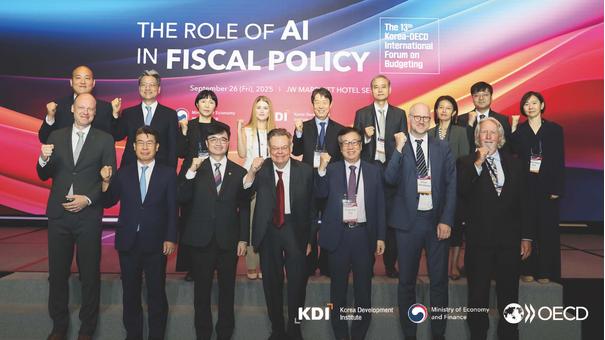
Artificial intelligence (AI) is redefining how governments design and deliver fiscal policy. At the 13th Korea–OECD International Forum on Budgeting, held in Seoul on September 26, leading fiscal experts from Korea and abroad gathered under the theme “The Role of Artificial Intelligence in Fiscal Policy.” Hosted by Korea's Ministry of Economy and Finance and co-hosted by the KDI and the OECD, the forum explored how AI can enhance efficiency, transparency, and sustainability in public finance.
|
 |
|
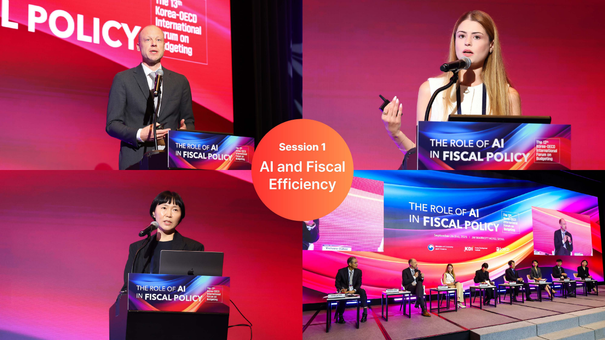
Session 1. AI and Fiscal Efficiency
Panelists noted that post-pandemic fiscal systems face rising pressure to manage complex datasets, volatile revenues, and widening social demands. Sven Kirspuu, Deputy Secretary-General for Budget at Estonia’s Ministry of Finance, showcased how Estonia leverages AI alongside Zero-Based and Performance-Based Budgeting to improve fiscal resilience and eliminate inefficiencies. Victoire Daher from the French Ministry of Finance emphasized that sovereign infrastructure, innovation in public services, and responsible and ethical use are central to building citizen trust in AI-driven fiscal innovation. Dr. Yeonhee Lee of Korea’s Electronics and Telecommunications Research Institute (ETRI) introduced Korea’s “digital twin” model for real-time tax forecasting, demonstrating AI’s potential to improve accuracy and policy agility.
|
 |
|
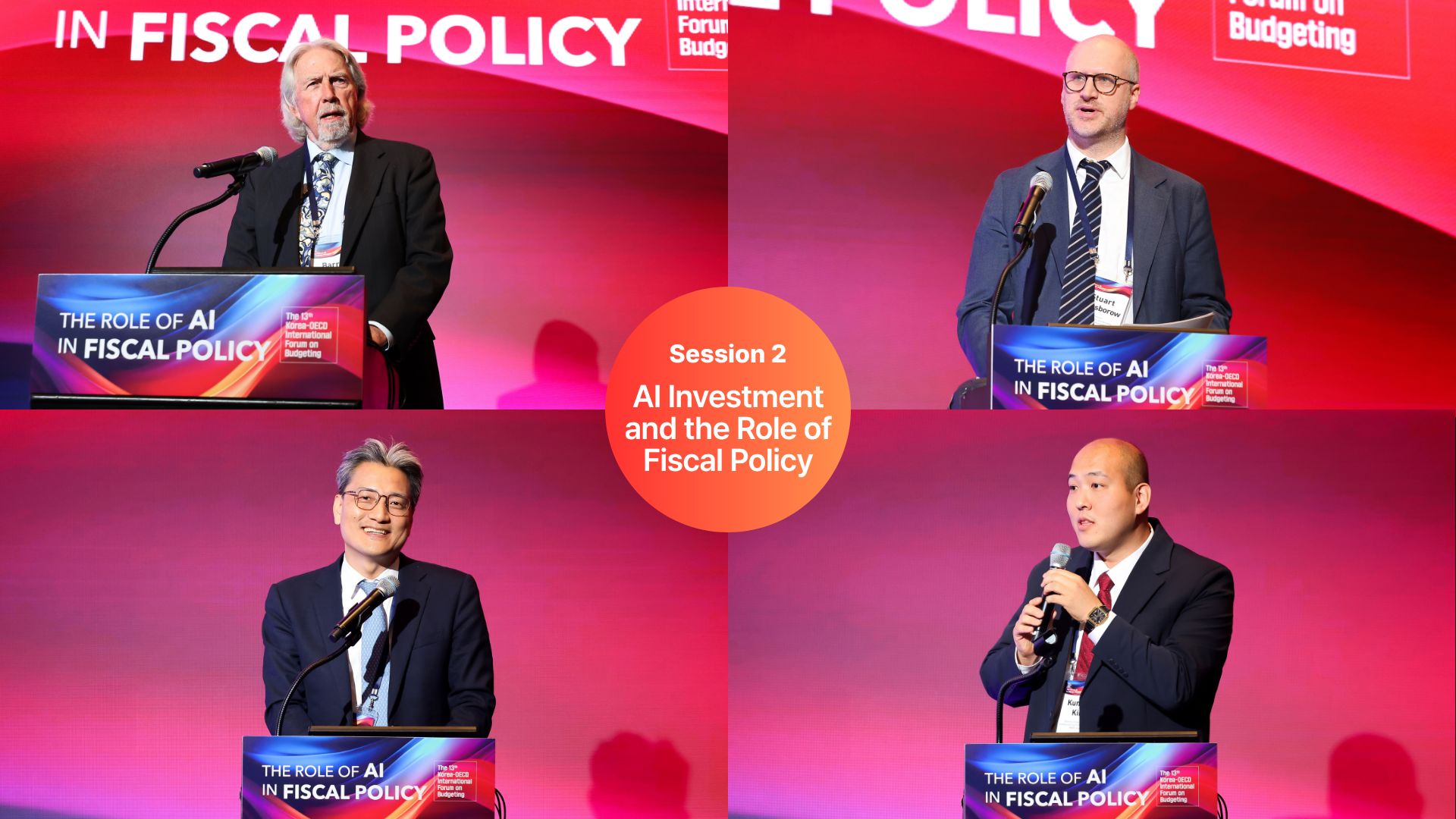
Session 2. AI Investment and the Role of Fiscal Policy
The discussion broadened to address AI’s role as a new driver of productivity and growth. Barry Anderson, Former Chair of the OECD Committee of Senior Budget Officials, observed that AI, like past technological shifts, will reshape, not replace, human expertise in fiscal institutions. Stuart Glassborow from the HM Treasury outlined the UK’s AI Action Plan, highlighting targeted investment and international cooperation as key to balanced growth. Dr. Jungwook Kim of KDI’s Center for International Development stressed that the public sector must take the lead in building data quality, fostering AI talent, and standardizing governance frameworks to ensure Korea’s fiscal competitiveness. Adding a Korean policy perspective, Kunmin Kim from Korea’s Ministry of Economy and Finance presented the government’s roadmap for leveraging AI to enhance budget efficiency and accountability.
Charting the Future of Fiscal Governance
As AI moves from experimentation to institutional adoption, fiscal authorities face both opportunities and challenges, ranging from data governance to capacity building. The forum reaffirmed Korea’s commitment to leading global dialogue on AI-driven fiscal innovation through continued cooperation with the OECD and partner countries.
■ View the presentation slides
■ Forum at a glance
|
 |
|
KDI Monthly Economic Trends
October 2025
Korea’s economy continued to show subdued growth as the prolonged downturn in construction weighed on overall production and employment. Yet consumption showed tentative signs of recovery, supported by lower market interest rates and government stimulus measures. Manufacturing activity strengthened, driven by surging automobile production amid robust passenger car sales. External headwinds persist, however, as global trade conditions worsen with renewed U.S.–China tensions and sustained high tariffs on automobile exports to the United States.
|
|
|
 |
|
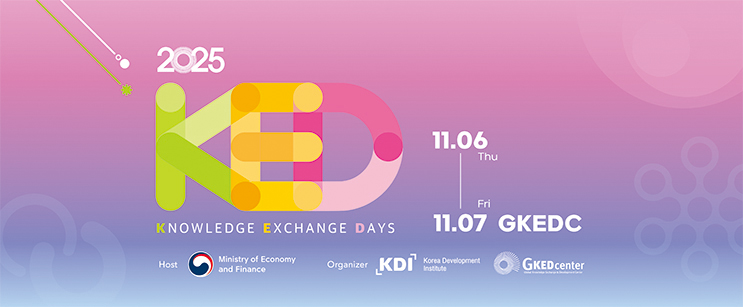
2025 Knowledge Exchange Days (KED)
The 2025 Knowledge Exchange Days bring together knowledge, experience, and generations to explore new solutions for climate change. Join us at the GKEDC on this global platform for knowledge sharing, where policymakers, experts, and future generations discuss policies, technologies, and financing strategies to build a sustainable future through climate action.
● Date: November 6 (Thu) – 7 (Fri), 2025
● Venue: Global Knowledge Exchange and Development Center (47 Hoegi-ro, Dongdaemun-gu, Seoul)
● Programs
① [International Conference] Integrating Policy, Technology, and Finance to Scale Up Climate Action Impact
② [Site Visit] Hands-on experience with climate technologies
③ [Youth Empathy Stage (YES)] ▲International Organization Career Talk (KED Talk) ▲Climate Finance Board Game (KED Play) ▲Cultural Performance (KED Night), and etc.
|
|
|
 |
|
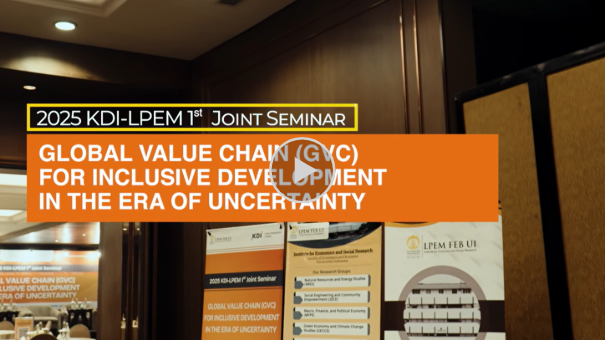
KDI–LPEM FEB UI Seminar Explores Global Value Chains for Inclusive Development
KDI and the Institute for Economic and Social Research, University of Indonesia (LPEM FEB UI), co-hosted a seminar in Jakarta under the theme “Global Value Chains (GVCs) for Inclusive Development in the Era of Uncertainty.” Building on their 2024 joint SME policy research, the event gathered policymakers and experts from Korea, Indonesia, and ASEAN to discuss strategies for enhancing labor productivity, strengthening MSMEs, and expanding GVC participation for inclusive growth.
■ View the presentation slides
■ Explore the highlights
|
 |
|
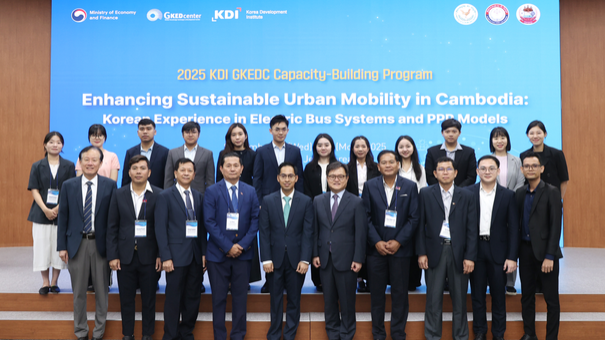
2025 KDI GKEDC Capacity-Building Program: Enhancing Sustainable Urban Mobility in Cambodia
The KDI Global Knowledge Exchange & Development Center (GKEDC) hosted the “2025 KDI GKEDC Capacity-Building Program: Enhancing Sustainable Urban Mobility in Cambodia” from September 17 to 22, 2025, in Seoul, Goyang, and Jeju. Organized at the request of the Cambodian government, the program supported the introduction of electric buses and Intelligent Transport Systems (ITS) in Siem Reap and strengthened Public-Private Partnership (PPP) capacity in urban transport. Twenty-one officials, led by the Secretary of State of the Ministry of Economy and Finance (MEF), who attended the full program, engaged in policy sessions and field visits to TOPIS, Tmoney, Hyundai Motor studio Goyang, and the Jeju Provincial Office. The program served as a platform for sharing Korea’s best practices in e-mobility and fostering practical cooperation between Korea and Cambodia.
|
|
|
|