
Economic Outlook KDI Economic Outlook 2020-1st Half May 20, 2020
Ⅰ. Current Economic Conditions
| □ | Korea’s economic growth is fast contracting especially in private consumption and exports due to COVID-19. |
- During 1Q, the negative impact of COVID-19 was most evident in the service industry due to in-person services.
| □ | On the demand side, private consumption is rapidly shrinking on an aversion to in-person services while investment is exhibiting a moderate recovery owing to the base effect from last year’s sluggishness. |
- Private consumption has fallen by a sizable margin amid a decline in GDI and worsening consumer sentiment as the import of services dropped sharply due to the overseas travel ban.
- The sluggishness in facilities and construction investment is easing on improvements in semiconductor-related machinery and the civil engineering sector.
- Exports are fast decelerating on cross-border restrictions imposed by major countries in the fight against COVID-19, becoming the primary factor that is weighing down growth momentum.
| □ | Considering both internal and external economic conditions, the Korean economy is projected to exhibit a sharply reduced growth with mounting uncertainties about the future in terms of the growth path. |
- The future macroeconomic trajectory is contingent on how the world deals with COVID-19. As such, controlling the disease is a prerequisite not only for reducing the death toll but also for smoothly restarting the economy.
| □ | In the short-term, economic policies should focus on supporting the vulnerable, stabilizing the macroeconomy and protecting the economic system. |
- Fiscal policies should accelerate the budget execution process in order to support vulnerable groups and to ease the reduction in private demand.
- To tackle the downward pressure on economic activity and inflation resulting from COVID-19, monetary policies need to employ non-conventional instruments after the base rate is cut down to the lowest possible level at the earliest possible time.
- Large-scale corporate bankruptcy and lay-offs could diminish production capacity, putting a drag on the rebound following a recovery from COVID-19. Thus, the government should move actively to protect the economic system through policy programs for liquidity provision and job security.
- As the global economy slows on the worldwide spread of COVID-19, continued efforts are needed for international coordination and cooperation.
| □ | Once COVID can be stopped, efforts must be made to prevent the temporary measures implemented to overcome the crisis from damaging productivity and the efficiency in resource allocation. |
- Care must be taken to ensure that the extensive support programs aimed at countering the COVID-19 crisis do not hinder the development of new growth engine industries by consistently interfering with the sound entry and exit of private firms.
- To prevent the short-term fiscal expansion from leading to deterioration in the mid- to long-term fiscal soundness, the government should clarify its plans for and commitment to stable fiscal management in the post-COVID-19 era.
- In addition, efforts are needed to strengthen international cooperation to stop the global spread of COVID-19 from loosening global value chains and escalating trade protectionism.
| □ | From a mid- to long-term perspective, an economic and social system that can flexibly respond to internal and external shocks and to the changes in the industrial structure should be established. |
- More flexibility is needed in the economic structure to aid in the seamless reallocation of resources to new growth industries that will emerge in the wake of COVID-19.
- In the long run, the education system should be reformed to swiftly adapt to the rapid changes in the economic environment including an expansion of public healthcare and the IT industry.
Ⅱ. Domestic Economic Outlook for 2020-2021
1. Expected External Conditions
| □ | The global economy will exhibit a steep decline in 1H 2020, followed by a moderate recovery in 2H. |
- The IMF projected that, due to the spread of COVID-19, the global economy will exhibit a reversed growth (-3.0%) in 2020 then gradually recover with a growth of 5.8% in 2021.
| □ | Crude oil prices (Dubai) will fall 45% from 2019, marking around $35 per barrel in 2020 before climbing to around $40 in 2021. |
| □ | The value of the Korean won, in terms of the real effective exchange rate, will descend by about 4% in 2020 and stay little changed in 2021. |
2. Outlook for Domestic Economy
| □ | The Korean economy is forecast to grow a mere 0.2% in 2020 due to the huge losses in private consumption and exports. There will be a favorable recovery at 3.9% in 2021. |
- Private consumption will take a nose-dive, especially in services. As the internal spread of COVID-19 slows, domestic consumption by residents will bounce back relatively fast, but overseas consumption by residents will remain weak into 2021 due to the continued restrictions on cross-border movements.
- Facilities investment will grow at a slow pace reflecting the impact of COVID-19, regardless of the recovery in global demand for semiconductors and the base effect from last year.
- Construction investment will gradually pick up from the sluggishness that has continued from 2018 on improvements in the civil engineering sector, especially in SOC.
- Exports and imports will see huge losses for the time being due to COVID-19, followed by a gradual moderation led by goods exports from 2H 2020.
| □ | Exports and imports will see huge losses for the time being due to COVID-19, followed by a gradual moderation led by goods exports from 2H 2020. |
| □ | Headline inflation is expected to remain low influenced by shrinking economic activity and falling oil prices while the expected inflation continues to trend down. |
| □ | Despite the sharp economic contraction, the unemployment rate is expected to edge up from 2019 (3.8%) to post 3.9% in 2020 due to the drastic fall in the labor force participation rate. |
- The number of employed persons in 2020 will maintain last year’s level as government programs partly offset the shock to the service industry (face-to-face interactions). The figure will gain approximately 200,000 in 2021 as the contraction in employment moderately eases.
3. Risks
| □ | The future of the Korean economy will vary greatly depending on the scope and duration of COVID-19. |
- If the global spread of COVID-19 wanes quickly, the negative impact will have a short-lived and limited effect on the service industry. From 2H, the Korean economy will exhibit a fast rebound.
- However, if COVID-19 is prolonged, the Korean economy will see a huge drop in investment and exports and a delayed recovery while its mid- to long-term growth path may face a downward adjustment.

Ⅲ. Policy Recommendations
1. Fiscal Policy
| □ | Fiscal policies need to be actively managed to counter the negative impact of COVID-19. Meanwhile, any further decisions on the size and composition of additional fiscal expenditure should come after a careful consideration of the ongoing changes in economic conditions. |
- Taking into account the high level of uncertainty, additional fiscal spending, if needed, can be considered, but a close preemptive examination is required of increasing expenditures that can become permanent fixtures.
| □ | On the other hand, the government should also implement other measures to secure fiscal sustainability since the recent sharp increase in fiscal deficit may pose a significant burden on future fiscal soundness. |
- In the mid- to long-term, to secure fiscal sustainability, the government should fully control the increase in spending through strategic expenditure restructuring while exploring policy alternatives to supplement the fiscal revenue.
2. Monetary Policy
| □ | To counter the downward pressure in economic activities and inflation, monetary policies need to adopt non-conventional instruments after the base rate is cut to the lowest possible level at the earliest possible time. |
| □ | Considering that inflation has long been stuck at a low level, the normalization of monetary policy should be pursued only after inflation steadily rises to the target (2%). |
- Even if inflation partly rebounds on an economic recovery or on rising agricultural product and oil prices, the monetary authority should wait to normalize monetary policy until the inflation rate is firmly anchored to the target.
Analysis of current economic issues
-
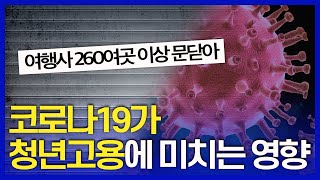 The Employment Situation of Youth and Policy Suggestions
■ Youth employment deserves more attention in times of crisis, particularly in a rapidly aging society. ■ The current economic crisis, which is caused by restrictions on face-to-face interaction and movements, is different from previous economic crises; also, the effects of employment policies may differ from those in the past. ■ While active discussions are now underway to expand social safety nets and reduce blind spots, additional measures are required for the young unemployed who have never been employed. ■ Even if the health crisis ends shortly in Korea, it will take a considerable amount of time to get employment back on track. Policies to create jobs for youth are needed. ■ If the health crisis does not end shortly, the economy is expected to undergo structural changes. The government needs to prepare longer-term measures such as new industrial policies and educational reforms.
-
Joseph Han
 profile
-
-
 Outlook for Korea’s Macroeconomic Path: Based on the Spread of COVID-19
■ The analysis finds that Korea’s GDP will most probably slip significantly below the previous path due to COVID-19, and the future trend is still very uncertain. ■ Short-term responses to the pandemic should focus on the prevention of a further spread while at the same time policy programs are put into place to mitigate the negative economic impact and reboot the economy, ■ After the COVID-19 crisis, efforts must be made to prevent temporary countermeasures from damaging productivity and efficiency of resource allocation.
We reject unauthorized collection of email addresses posted on our website by using email address collecting programs or other technical devices. To access the email address, please type in the characters exactly as they appear in the box below.
Please enter the security code to prevent unauthorized information collection.