
News 「2026 Knowledge Exchange Days (KED)」Painting the Future: Life after the AI Singularity
「2026 Knowledge Exchange Days (KED)」Painting the Future: Life after the AI Singularity
「2026 Knowledge Exchange Days (KED)」
Painting the Future: Life after the AI Singularity
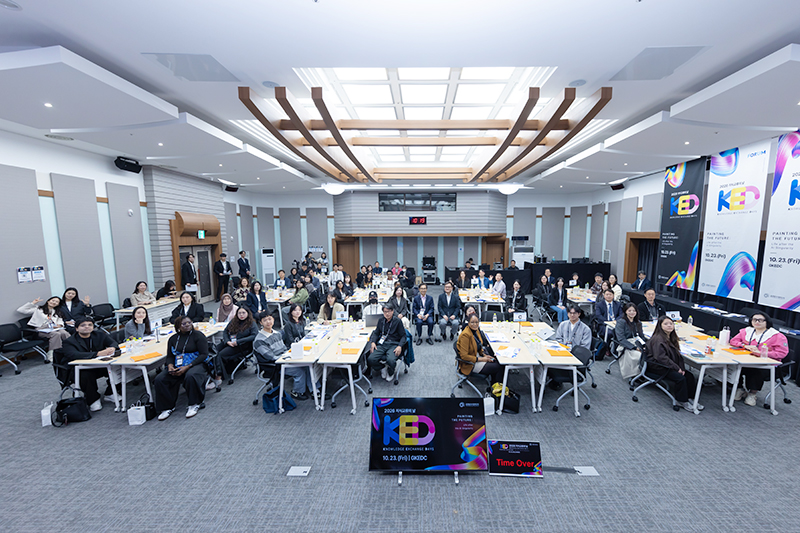
Hosted by Korea’s Ministry of Finance and Economy (MOFE) and organized by the Global Knowledge Exchange and Development Center of the Korea Development Institute (KDI GKEDC), the 2026 Knowledge Exchange Days (KED) took place on October 23, 2026, at GKEDC in Hongneung, Seoul.
Now in its third year, KED brings together diverse stakeholders to share knowledge and experience on major global issues. Under the theme “Painting the Future: Life after the AI Singularity,” this year’s program featured ▲a forum involving citizens and experts, ▲a Career Talk on international cooperation, and ▲networking activities and a cultural evening.
A distinctive feature of the forum was the direct participation of Korean and international citizens as panelists, who shared their hopes and worries about the future in the age of AI, drawing on their personal lives and experiences. Their perspectives and questions informed the subsequent expert panel discussion, allowing the forum to examine the future in the AI era from two perspectives: individual lives and choices, and changes in social institutions and structures.
[Keynote Speech and Forum Session 1 | Advances in AI and Changes in Individual Lives]
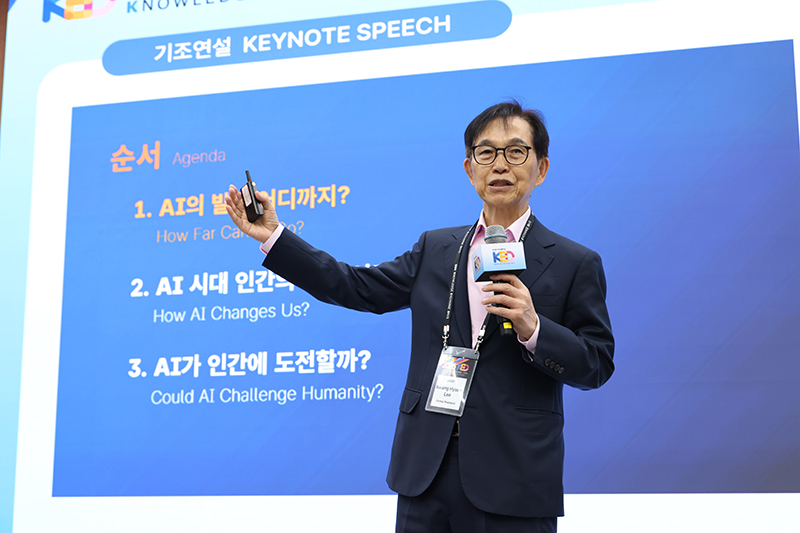
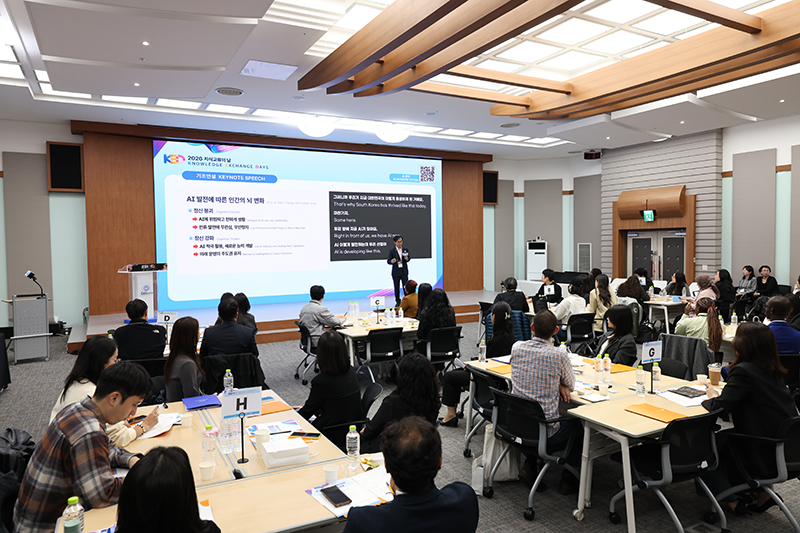
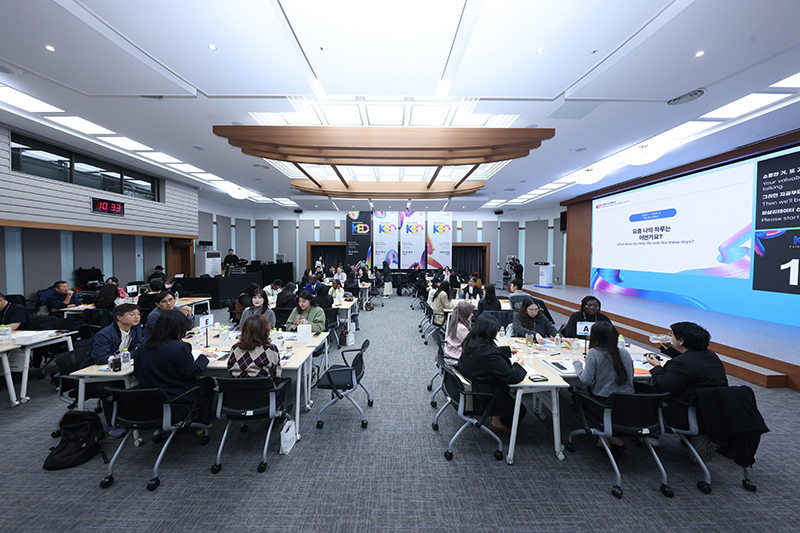
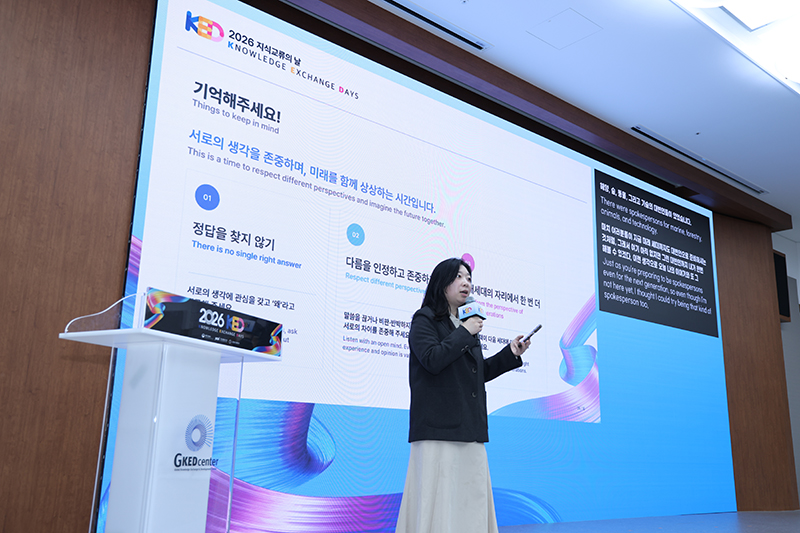
The keynote speech and Forum Session 1 explored ▲the current state and future potential of AI and ▲changes in work and everyday life through small-group citizen discussions.
Kwang Hyung Lee, former President of KAIST, delivered the keynote speech, “How far has AI come and where is it headed?” He examined the future direction of AI development and set the stage for discussions on economic and social change.
Professor Tae-Kyung Kim of Sungkonghoe University then served as the lead facilitator for Session 1, “Individual Choices.” The preselected citizen panel comprised Korean and international participants from diverse backgrounds, including young people and professionals working in international organizations, government, public institutions, and academia.
Ten facilitators, including KDI researchers, guided small-group discussions around the question, “How will I earn a living, and where will I spend my time?” Participants reflected on their current lives and envisioned their lives in 2045. They shared their hopes and concerns about the future and discussed the choices and challenges individuals might face in a changing world. The perspectives and questions raised during these discussions served as the basis for the afternoon expert panel discussion.
[Forum Session 2 | Exploring Societal Responses to Citizens’ Questions]
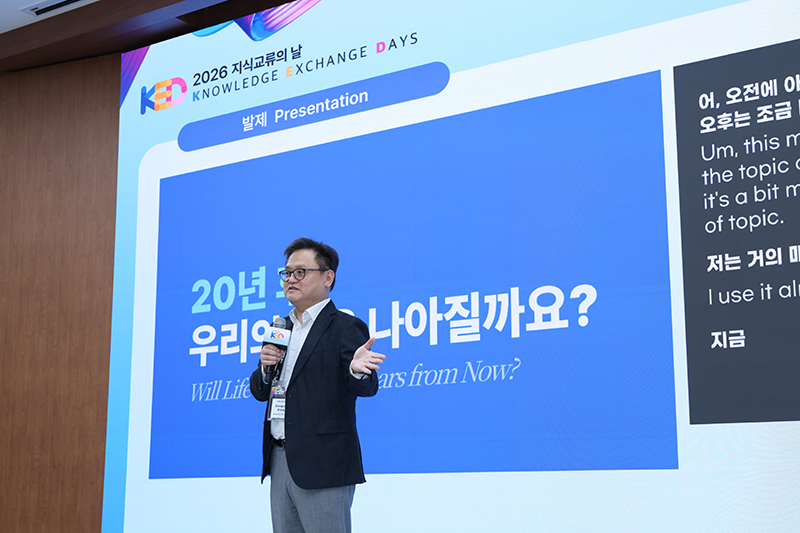
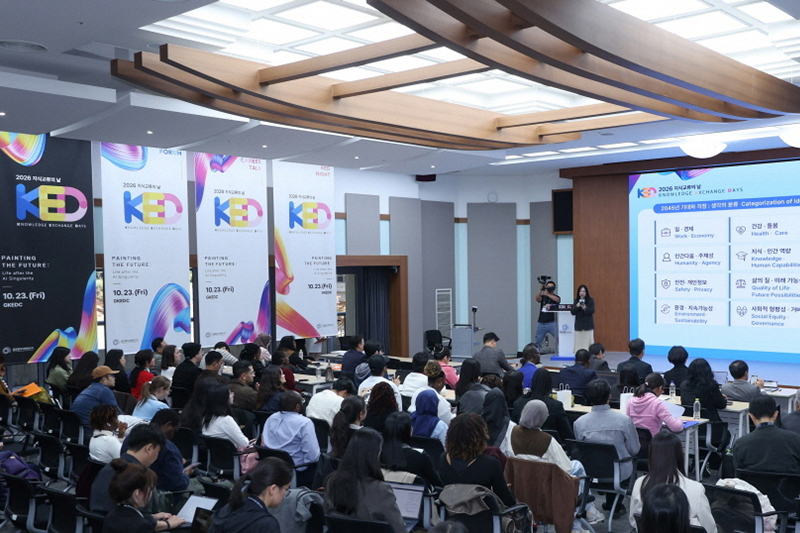
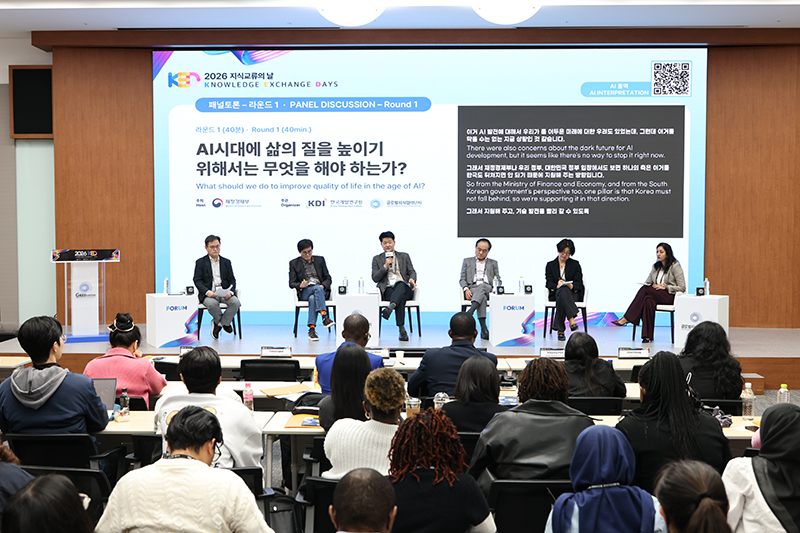

Session 2, “Society’s Choices,” drew on questions raised during the citizen discussions to ▲examine potential changes in social institutions and conditions resulting from advances in AI and ▲explore societal responses needed to prepare for the future.
Dongsoo Kang, Executive Director of KDI GKEDC, delivered a presentation titled “Societal Challenges after the Technological Singularity” and moderated the panel discussion. Panelists included M. Jae Moon, Underwood Distinguished Professor at Yonsei University; Sekyung Park, Senior Research Fellow at the Korea Institute for Health and Social Affairs (KIHSA); Chul Chung, President of the Korea Economic Research Institute (KERI); Kwangchul Ji, Director General of the Office for Hyper-Innovation Economy at MOFE; and Tahani Iqbal, Senior Digital Transformation Specialist at the Asian Development Bank (ADB).
The experts examined citizens’ questions about work and income, time use, care, and relationships in the broader context of labor, welfare, public policy, and digital transformation. They considered the conditions under which the futures envisioned by citizens might materialize and exchanged perspectives with participants through an audience Q&A.
[Career Talk | Sharing Career Development Experience and Practical Skills in International Cooperation]
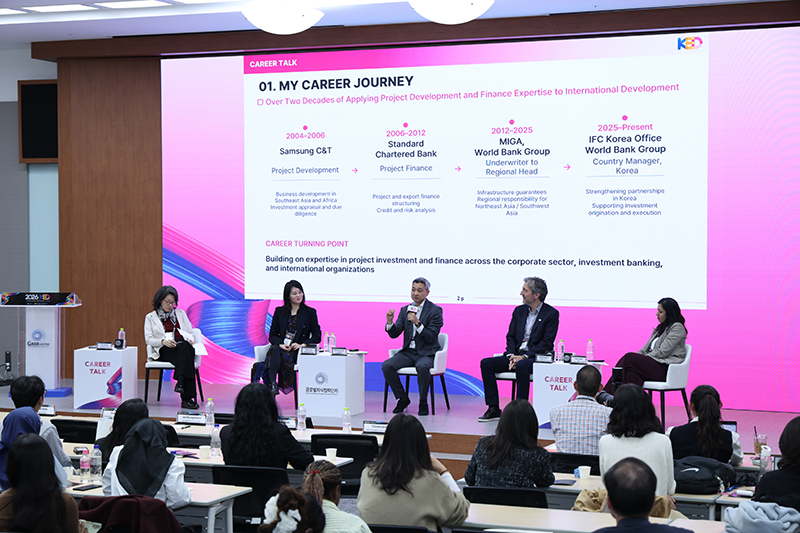
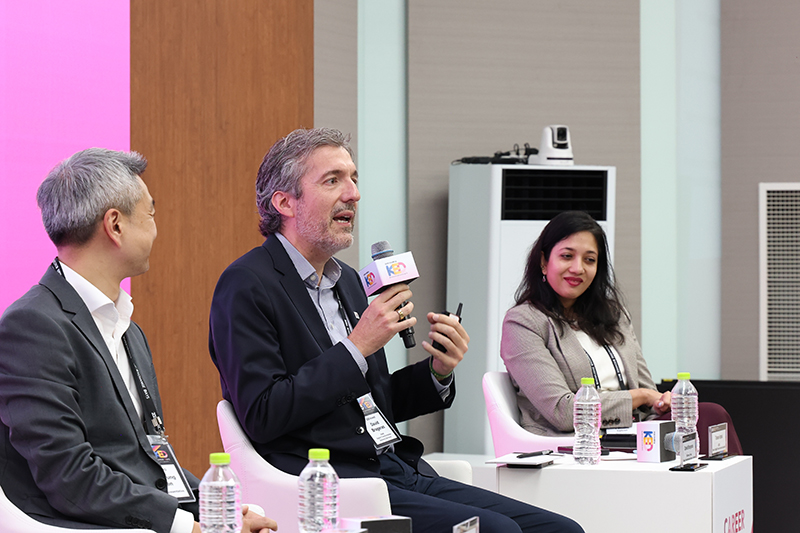
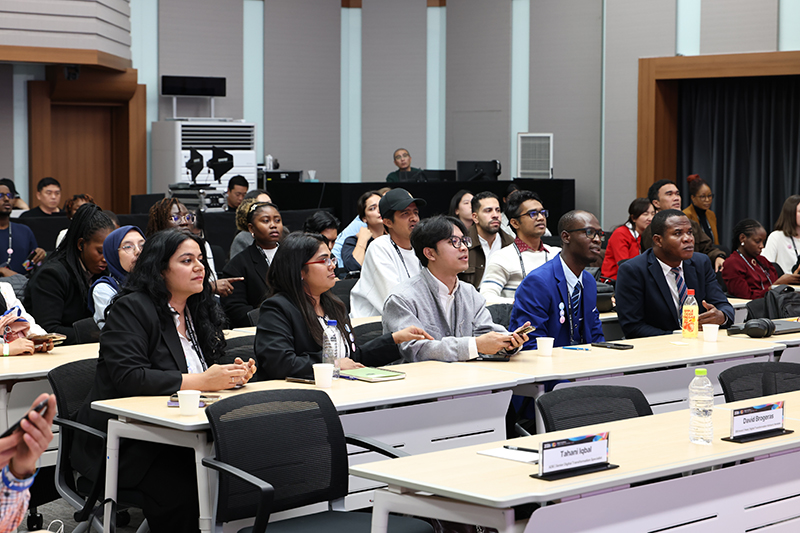

The Career Talk supported young people interested in international cooperation through ▲presentations and discussions on practitioners’ career development experiences and practical skills and ▲small-group mentoring.
Jie-ae Sohn, Professor at Ewha Womans University, moderated the session. Panelists included Haina Kang, Senior Climate & Energy Officer at the British Embassy Seoul; Jae Hyung Kwon, Korea Representative of the International Finance Corporation (IFC), World Bank Group; David Brogeras, Head of Digital Transformation Advisory Services at IDB Invest; and Tahani Iqbal, Senior Digital Transformation Specialist at ADB.
The speakers shared their paths into international cooperation, discussed key career decisions, and answered participants’ questions. Participants gained insight into the work and roles of different institutions and considered how to prepare for careers in their areas of interest.
Small-group mentoring sessions followed for preselected participants. Participants discussed individual career questions directly with practitioners and received advice on career development and skills building.
[Networking and KED Night | Building Connections through Interactive Activities and Cultural Performances]
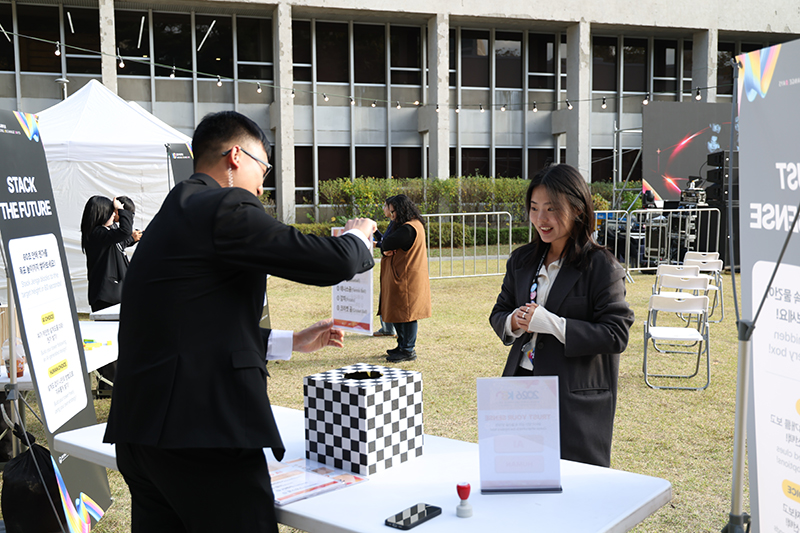


The networking activities and KED Night provided opportunities for participants to connect through ▲interactive activities exploring AI and human judgment and ▲outdoor cultural performances.
The interactive program featured challenges such as identifying AI-generated images and guessing objects using sensory information and clues. Participants used AI suggestions and their own judgment to complete tasks while interacting with one another.
In the evening, KED Night took place on the outdoor lawn. Participants enjoyed performances by singers John Park, Soyou, and Lee O Wook and continued their conversations in a relaxed setting.
KDI GKEDC will continue to promote knowledge exchange and cooperation on major global issues through the participation of citizens and partner institutions in Korea and abroad.
Written by: JOO, Min Je, Senior Research Associate, Global Knowledge Cooperation Team 1 Center for Global Knowledge Exchange & Development, Korea Development Institute (KDI) Tel. +82-6312-4082, Email: jmj89628@kdi.re.kr
We reject unauthorized collection of email addresses posted on our website by using email address collecting programs or other technical devices. To access the email address, please type in the characters exactly as they appear in the box below.
Please enter the security code to prevent unauthorized information collection.