
News 「KDI GKEDC-EBRD Food Loss and Waste (FLW) Blended Learning Programme」 Successfully Concluded
「KDI GKEDC-EBRD Food Loss and Waste (FLW) Blended Learning Programme」 Successfully Concluded
「KDI GKEDC–EBRD Food Loss and Waste (FLW) Blended Learning Programme」 Successfully Concluded
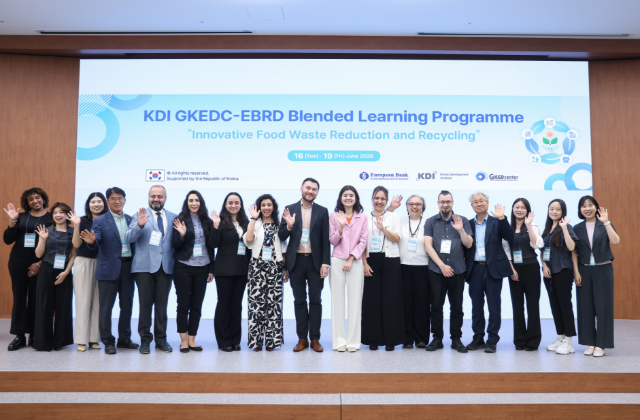
The KDI Global Knowledge Exchange and Development Center (GKEDC), in collaboration with the European Bank for Reconstruction and Development (EBRD), successfully delivered the “KDI GKEDC–EBRD Food Loss and Waste (FLW)* Blended Learning Programme,” which combines online learning and an in-person study visit in Korea.
* FLW is used throughout this article as an abbreviation for Food Loss and Waste
Under the newly developed BETTER* learning framework, the program was structured as a progressive learning process in which participants first learned the concept of FLW and Korea’s major policy and technology cases through pre-program online lectures, and then expanded this learning into field experience and policy implementation plans through an in-person study visit.
* BETTER (Building Effective Training Through Engagement & Reflection) is a learning framework developed by KDI GKEDC and EBRD for the Blended Learning Programme. It consists of six progressive stages of learning: Build, Examine, Transfer, Think Critically, Evaluate, and Reconstruct.
In particular, the in-person programme, held from June 16 (Tue) to 19 (Fri), 2026, was conducted under the theme ‘Digital×Food: High-Tech Solutions to Minimize Food Loss and Waste’, bringing together policymakers from the food, agriculture, and environmental sectors of Türkiye and Croatia.
[Day 1 (Tuesday, June 16, 2026) | Optimizing Logistics for Effective Food Loss Prevention]
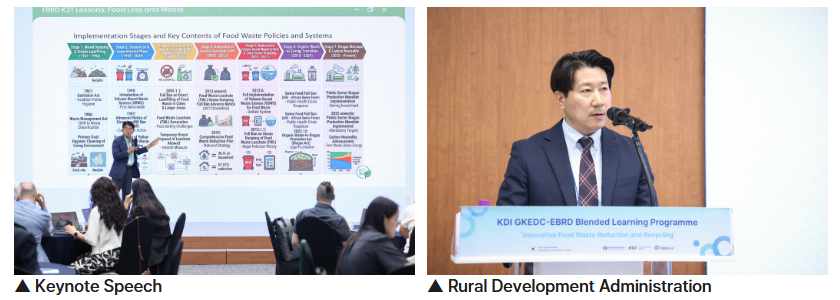
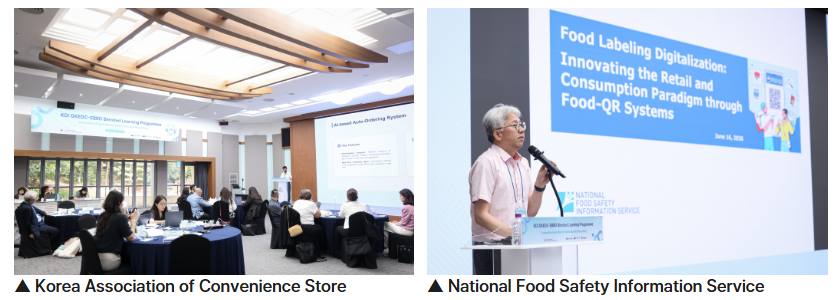
The first day featured a keynote speech and country presentations introducing ▲Korea’s, Türkiye’s, and Croatia’s FLW policies and current status, followed by a knowledge-sharing seminar with expert lectures on ▲technologies for reducing food loss at the production and distribution stages.
In the keynote address, Honorary Chair Professor Chae-Gun Phae of Seoul National University of Science and Technology presented an overview of Korea’s FLW policies and major institutional frameworks, while outlining policy directions for building a sustainable food system. Together with Dr. Il Jeong Jeong, Former Director General of the Ministry of Agriculture, Food and Rural Affairs, Professor Phae then provided advisory comments on the country presentations delivered by the Türkiye and Croatia delegations and discussed key considerations for policymaking.
In the afternoon, Dr. Jong Guk Lim, Director at the National Institute of Agricultural Sciences, Rural Development Administration, introduced Korea’s post-harvest management technologies. This was followed by a presentation from Dr. Kyung Suk Oh, General Manager of the Korea Association of Convenience Store Industry, on AI-based automated ordering systems and cold chain management. The day concluded with a presentation by Mr. Sung Moon, Director at the National Food Safety Information Service, who shared Korea’s experience in reducing food loss through data-driven approaches and the digitalization of food information using the Food QR system.
[Day 2 (Wednesday, June 17, 2026) | Promoting FLW Reduction through Direct Human Consumption]
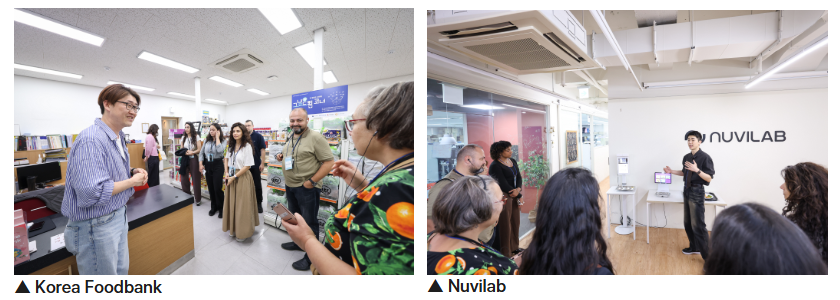
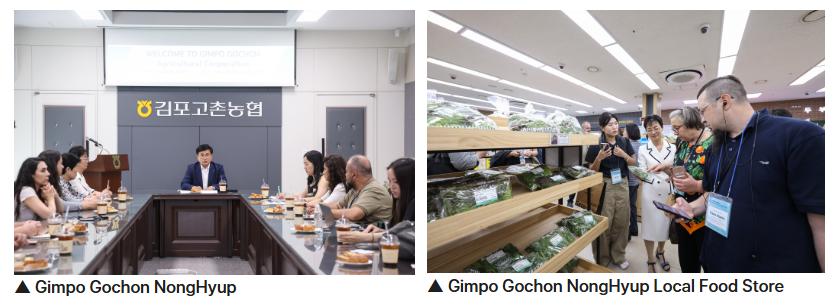
The second day featured site visits focusing on ▲food donation and redistribution systems through food banks, ▲AI-based food waste analysis, and ▲local food initiatives for reducing food loss and waste.
At Korea Foodbank, participants attended a seminar on the food bank operating system, the Food Management System (FMS), and food safety management, and then visited the Yeongdeungpo local food bank to observe operations and examine on-site implementation practices.
The delegation next visited Nuvilab, where they learned about behavioral-change strategies that link AI-based food waste scanners with carbon-neutrality points, as well as the resulting impact on reducing food waste in practice.
The final visit of the day was to the Gochon Nonghyup Local Food Market in Gimpo, where participants learned how the distribution structure for locally produced agricultural products and the local food direct-sales system contribute to reducing food loss and promoting a circular local economy, and toured the market to observe the direct-sales model in practice.
[Day 3 (Thursday, June 18, 2026) | Turning Waste into Value with Smart Solutions]
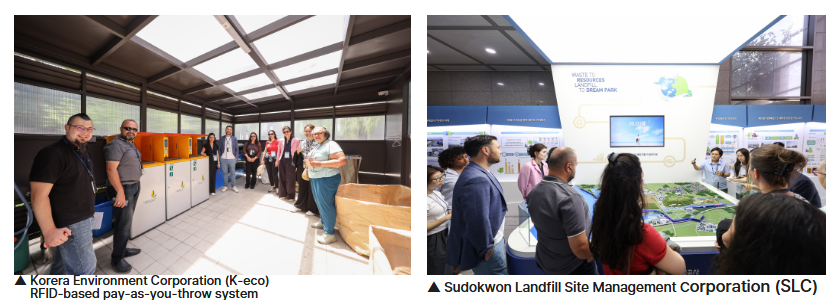
The third day focused on ▲Korea’s RFID-based food waste management system and ▲waste-to-resource and biogas production sites, followed by an Action Plan Workshop in which participants developed country-specific action plans based on the training covered over the previous three days.
At the Korea Environment Corporation (K-eco), participants learned about the operation of Korea’s RFID-based pay-as-you-throw system and its integrated data management framework, then visited a residential apartment complex equipped with RFID food waste collection devices to observe the system in operation.
The delegation then visited the Sudokwon Landfill Site Management Corporation (SLC) to tour the landfill facilities and learn about Korea’s waste treatment processes, biogas production, and resource circulation practices.
The final session of the day was an Action Plan Workshop, in which participants refined policy priorities and implementation strategies for their respective countries based on the knowledge and practical experience gained throughout the programme, and developed country-specific implementation plans.
[Day 4 (Friday, June 19, 2026) | Envisioning Ideas for the Next Step]
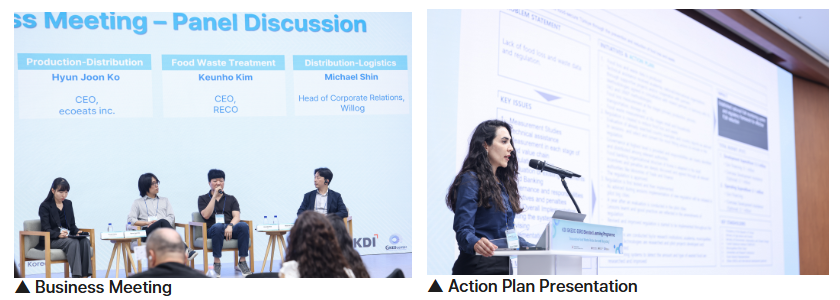
The final day featured ▲business meetings with Korean companies specializing in FLW solutions and ▲presentations of country-specific Action Plans.
The business meeting session was organized around different stages of the FLW value chain. Representing the production and distribution stage, Mr. Hyun Joon Ko, CEO of ecoeats, introduced ecoeats’ surplus food distribution platform and food upcycling business model. Addressing the distribution and logistics stage, Mr. Michael Shin, Head of Corporate Relations, and Mr. Owen Seok, Product Design Team Lead of Willog, presented the company’s cold chain monitoring and data management solutions. Finally, from the perspective of food waste management, Mr. Keunho Kim, CEO of RECO, introduced RECO’s digital waste management and resource circulation platform.
As the final outcome, the delegations from Türkiye and Croatia presented their country-specific Action Plans. Under the guidance of Professor Yeona Hong of Kongju National University and Dr. Munsol Ju, Senior Research Fellow at the Korea Environment Institute (KEI) — both of whom had also served as lecturers for the online module — participants reviewed the feasibility of their proposed policy actions and explored opportunities for future cooperation.
The programme is particularly meaningful in that it enabled participants to first build a solid foundation through online learning and then expand that knowledge into practical field experience and actionable policy planning. Through this blended learning approach, participants gained a comprehensive understanding of Korea’s FLW management policies, public systems, digital technologies, and private-sector innovations, generating practical insights they can apply to policymaking and project development in their own countries.
Meanwhile, the online module developed by KDI GKEDC consists of a total of 12 lectures covering ▲food loss prevention across the value chain, ▲food waste reduction at the consumption stage, and ▲sustainable waste treatment strategies, and is freely available to anyone through the EBRD Impact Academy platform.
Written by Yuna Kim, Research Associate, International Cooperation Team 2, Global Knowledge Exchange and Development Center (GKEDC), yuna_kim@kdi.re.kr
We reject unauthorized collection of email addresses posted on our website by using email address collecting programs or other technical devices. To access the email address, please type in the characters exactly as they appear in the box below.
Please enter the security code to prevent unauthorized information collection.